Secret in the Pan, Flavour in the Bread: The Story of the Bifana
From Alentejo to Porto: the bifana and the secrets in the pan.
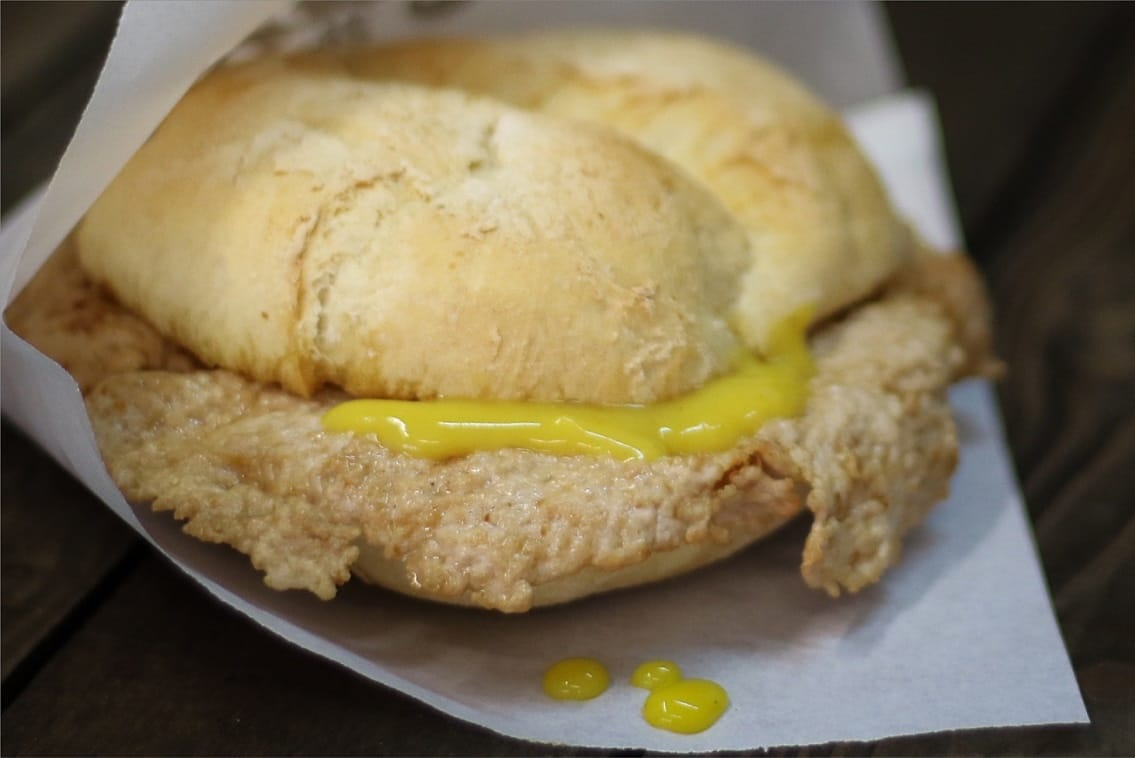
When people speak of the origin of the bifana, many point at once to Alentejo — more precisely, to the town of Vendas Novas.
No one knows for certain who first placed slices of pork in a crisp papo-seco, but there is a delicious consensus: it was somewhere in Vendas Novas, several decades ago, that this delicacy took shape. The bifanas of Vendas Novas became so emblematic that the municipality itself registered the brand “Bifanas de Vendas Novas” in 2011. The town proudly claims the title of capital of the bifana.
Popular history points to the 1960s. The year 1968 is often cited as the birth of the original recipe, in a modest cafe: the legendary Café Boavista, beside Estrada Nacional 4 (EN 4).
Its location was strategic: the EN4 was the main road between Lisbon and inland Alentejo, long before the motorways, and Vendas Novas was the gateway to Alentejo. The cafe became an obligatory stop for lorry drivers, salesmen and families on the road. It was there that they would “matar o bicho” with a freshly made bifana.

Café Boavista, Vendas Novas, Estrada Nacional 4
Café Boavista still exists today and keeps the tradition alive. Maria Clara Isabel took over the business, alongside her husband, Manuel Cardante, more than 40 years ago. At first, they served “a bit of everything” - from feijoadas to snails - but the call of the bifana spoke louder.
“Demand was so great that I left everything else aside,” she told Expresso in 2017.
It was then that she reshaped the menu and staked everything on bifanas, based on a family recipe.
Today, the loin steaks are still pounded until tender, fried in the special sauce - in frying pans designed specifically for bifanas - and served in toasted papo-seco. When Expresso asked her about the rest of the recipe, she smiled and replied, “The rest is secret.”
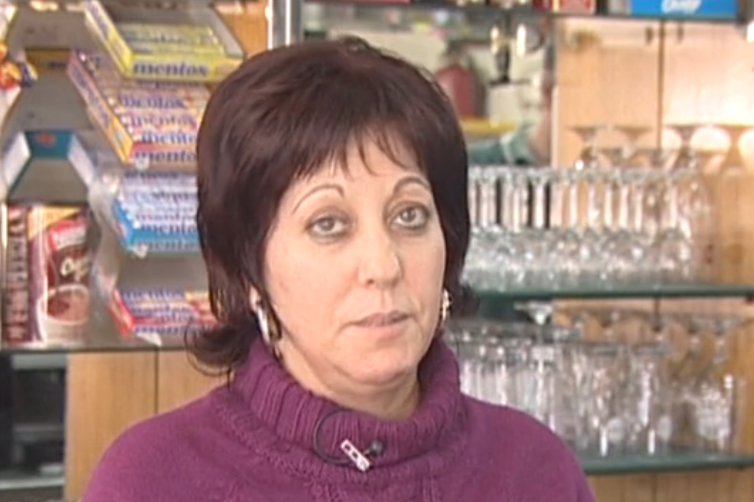
Maria Clara Isabel, former owner of Café Boavista. Known by many as the “queen of bifanas”
Every cafe keeps its own touch, but the base is common: white wine, garlic, bay leaf and, perhaps, a hint of pimentão or piri-piri. Deep down, the secret lies in the hands of the person who makes them.
Vendas Novas became a true “Mecca” of the bifana. It is estimated that, in the town alone, around 3,000 bifanas are sold every day — almost one million a year.
In 2024, the municipal festivities celebrated that pride with creativity: it was there that the “World’s Largest Bifana” was cooked, with a 15-metre loaf made by the local bakery and around 32 kilos of bifanas from several cafes in town. It is estimated that around 1,000 people tasted this giant bifana.
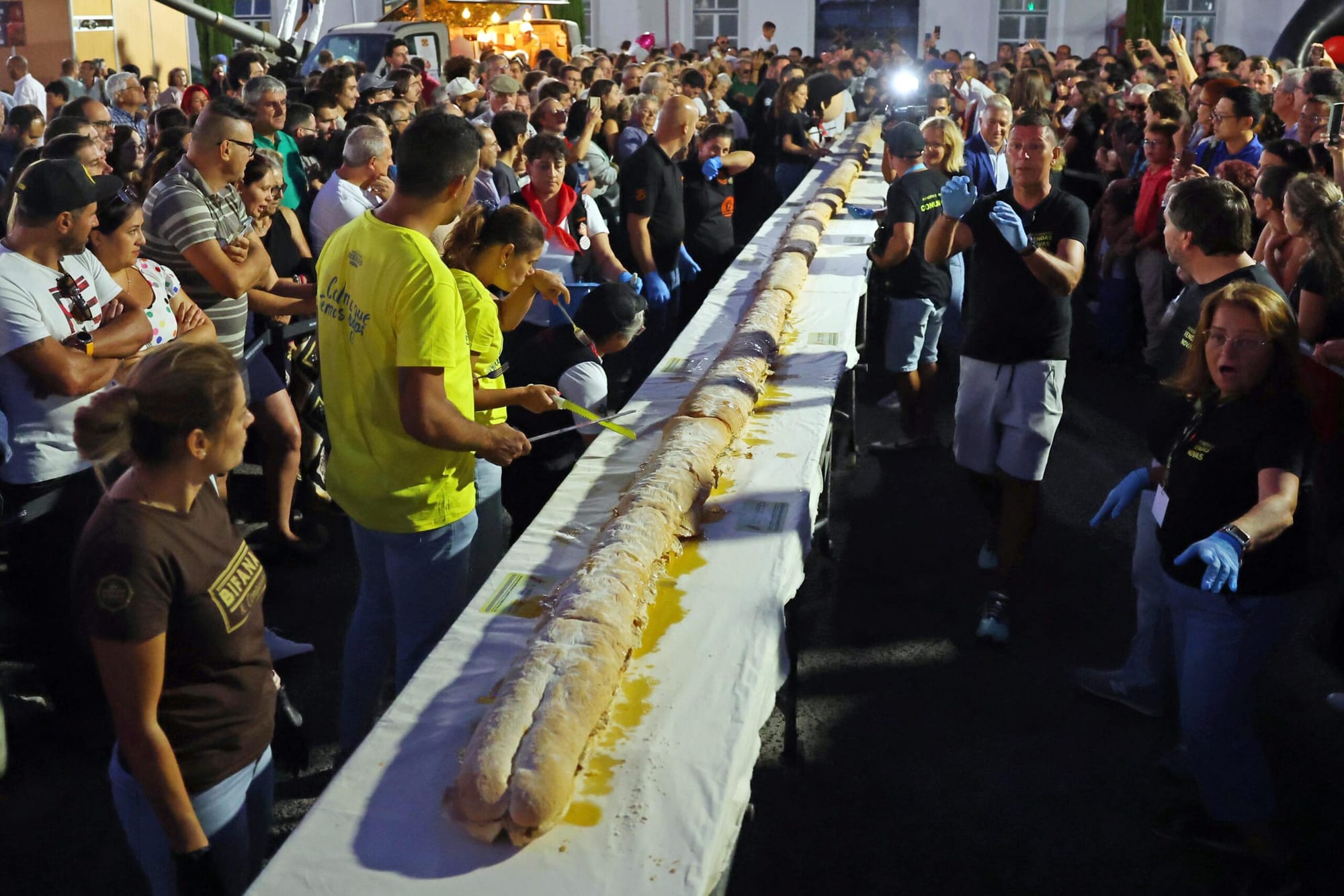
The World’s Largest Bifana, Saturday 9 September 2024
Curiously — in a sad kind of poetry — Maria Clara Isabel, former owner of Café Boavista, died on the very Saturday when the town was cooking the “World’s Largest Bifana”. She was 69. Guardian of decades of tradition at Café Boavista, she departed on the same day that Vendas Novas celebrated its most famous snack.
The coincidence deeply moved the local community, which recognises in her one of the great figures responsible for carrying the name of the bifana beyond Portugal’s borders. Her legacy, like the aroma of a hot bifana, will remain in the air for a long time.
Stories, curiosities and legends of the bifana
No good gastronomic story is complete without a few pinches of legend and curiosity. And the bifana has several!
Before Vendas Novas claimed the bifana throne, people were already speaking of the famous bifanas of Casa Branca — a village born with the railway, in the municipality of Montemor-o-Novo.
Casa Branca station opened in 1857 on the Vendas Novas - Évora stretch, today known as the Alentejo Line (North-South). Fourteen years later, in 1871, the Évora Line (East-West) was inaugurated.
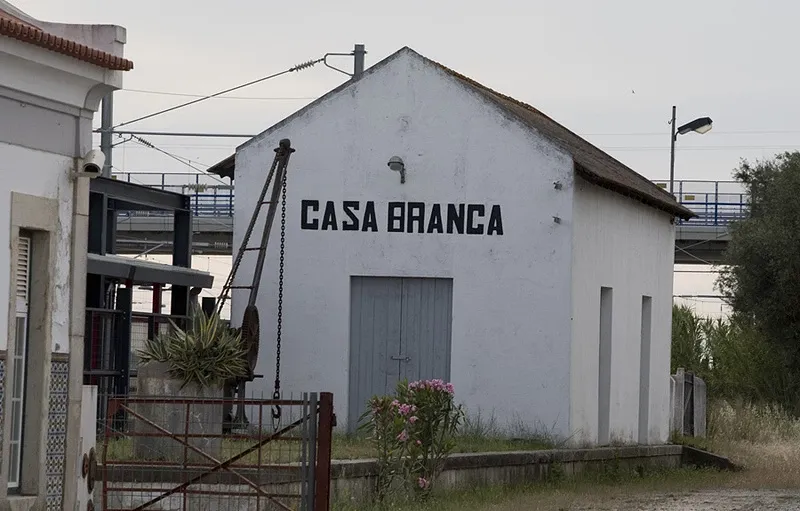
Casa Branca, railway village, municipality of Montemor-o-Novo, parish of Santiago do Escoural
In the golden age of steam trains, Casa Branca station was, for decades, an obligatory stop on the links between Lisbon and deep Alentejo. Houses were built for railway workers, a school appeared, and cafes and restaurants sprang up for those waiting for the trains to arrive. A place of passage, but with flavours that stayed.
Legend has it that, in one of those places beside the station, a woman in a flowered apron, with hands shaped by work, served what she had: bread, wine and meat. But one day the meat had arrived tough. “No one can chew this,” she murmured. She thought for a moment, took white wine - which was never lacking there - crushed cloves of garlic with one firm blow, added bay leaf and a little lard, and left the meat to soften in the sauce, over a low flame, as if whispering secrets to the stove. The smell spread down the street like an announcement of a feast.
Later, with the tradition already established, Maria Eugénia began serving bifanas more than 50 years ago in a small cafe with tiled walls, beside the station.
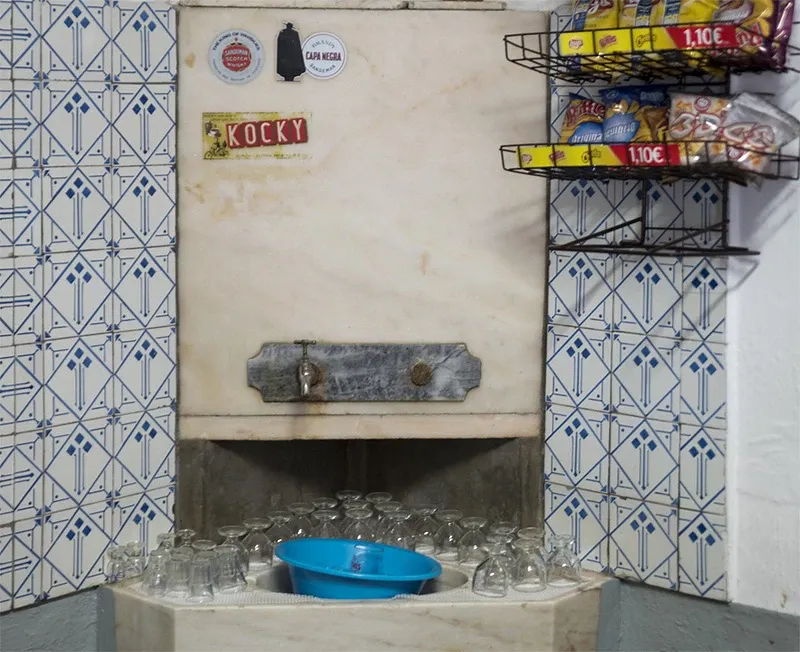
Cafe with tiled walls where, for 40 years, Maria Eugénia served bifanas
“A lot of people came on the trains, soldiers, sailors… lots of people. The train stopped for a quarter of an hour and I once sold a hundred bifanas,” recalls Maria Eugénia.
The bifanas of Casa Branca became renowned. Unfortunately, with the decline of railway traffic, the tradition gradually faded; today bifanas are hardly served at that station anymore - they were replaced by sandwiches and cakes. What remains is the memory, stamped into the conversations of those who lived it.
So, Casa Branca or Vendas Novas? Where was the bifana born, after all?
The origin of the bifana, like so many popular recipes, is wrapped in mystery, memories and oral tradition. Two places dispute — without rivalry, but with pride — the cradle of this Portuguese delicacy:
• Vendas Novas is considered the “official” birthplace of the bifana. It was there that, in the 1960s, the recipe gained its modern form and national recognition, especially at Café Boavista. The town registered the brand “Bifanas de Vendas Novas” in 2011 and proudly took on the title of capital of the bifana.
• Casa Branca, a small railway village in Montemor-o-Novo, has even older stories, told by those who lived there: bifanas sold beside the station since the days of steam trains, made with pork softened in wine, garlic and bay leaf.
There are no formal records proving a single origin. The most likely answer? That the idea of putting pork in bread arose in several parts of Alentejo at the same time — in roadside cafes, railway stations and humble tascas.
Deep down, the bifana was born where there was hunger, ingenuity and fresh bread. And of those, Alentejo has always been well supplied.
From Alentejo to the rest of the country: bifanas for every taste
It was to be expected that such a simple idea — well-seasoned pork inside fresh bread — would quickly conquer other places. And so it did. Today, bifanas can be found from north to south, often with delicious regional variations.
In Lisbon, for example, there are several celebrated tascas, but it is impossible not to mention As Bifanas do Afonso, in the city centre. Behind a discreet little doorway on Rua da Madalena, near Rossio, Sr. José Afonso began serving bifanas in 1975, just as democracy was arriving. Success was immediate: five decades later, that tiny counter has seen generations of Lisboetas and tourists form long morning queues, waiting for a bifana dripping with sauce.
The sauce, indeed, is the pride of the house — made with lard, garlic, bay leaf and other seasonings — and the tradition has remained almost intact from the beginning. It is said that regular customers manage to bypass the tourists’ queues by entering through the side door, a privilege earned through loyalty to the house. No wonder many consider it the best bifana in the capital — the one that, as some food critics say, “raises pork to another level”.
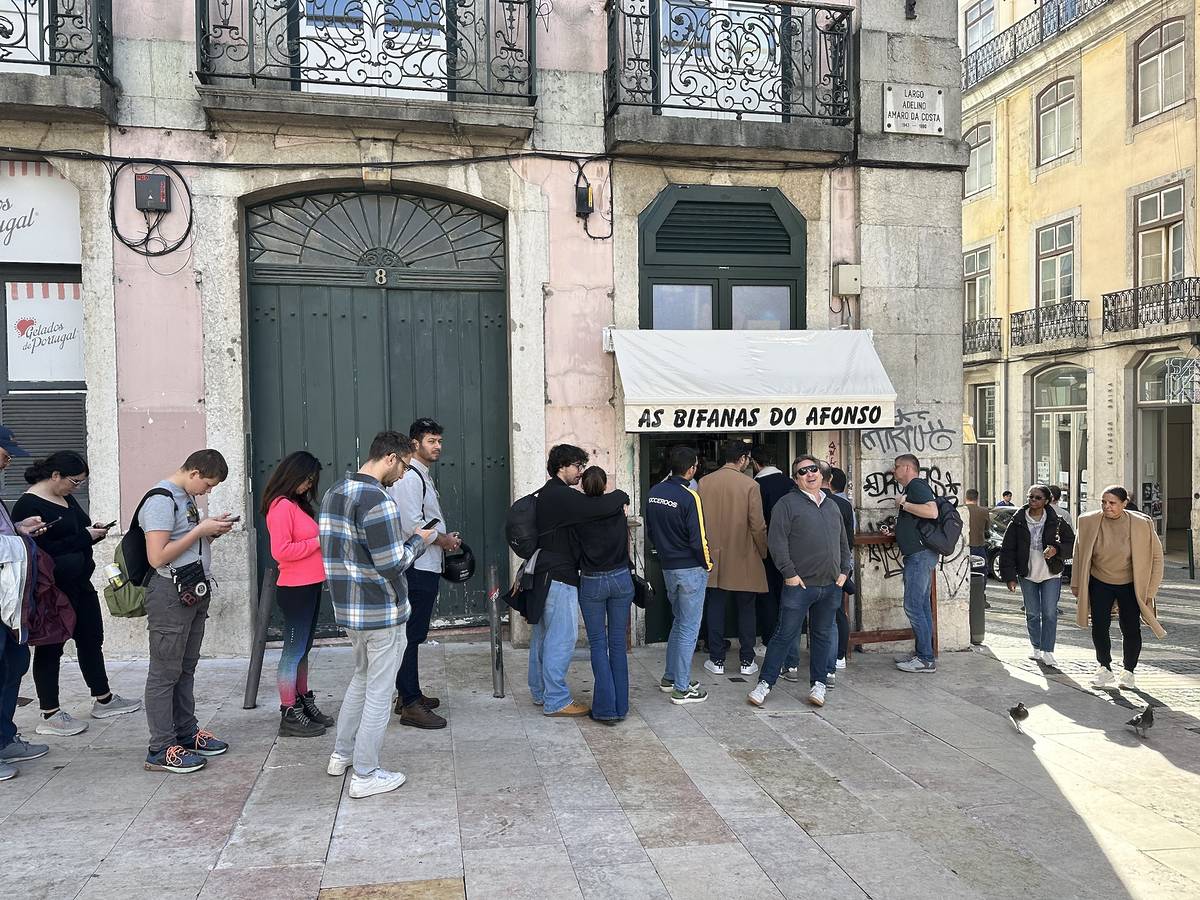
As Bifanas do Afonso, a reference tasca for bifanas in Lisbon.
Meanwhile, in Porto, the bifana gained its own accent and a place of honour beside the famous francesinha. The Porto version usually comes drowned in a peppery sauce, and the meat is sliced into very fine strips. The most iconic place? Without a doubt, Casa das Bifanas Conga, on Rua do Bonjardim.
Opened in 1976 by Manuel Oliveira — an entrepreneur returned from Angola — Conga saw its pans emptied within a few hours on the very first day, such was the rush for bifanas with the “so wonderful” spicy sauce he had invented.
“On the day the restaurant opened, after three hours the meat ran out. It was madness; no one expected it,” recalls Sérgio Oliveira, the founder’s son, in conversation with Culinary Backstreets.
The formula for success? Pans in full view of the public, bubbling with meat slowly cooking in a sauce of secrets - people speak of piri-piri, cumin, wine and other spices. The aroma spreads through the street and attracts every kind of customer, from students to tourists who have just landed and go straight from the airport to Conga, suitcases in hand, simply to ease their longing for that bifana.
Today, Conga serves more than a thousand bifanas a day and has had to expand its premises to keep up with demand. In Porto, other houses followed its example, and the “bifana à moda do Porto” became an obligatory presence at festivals, romarias and well-watered nights in the North.
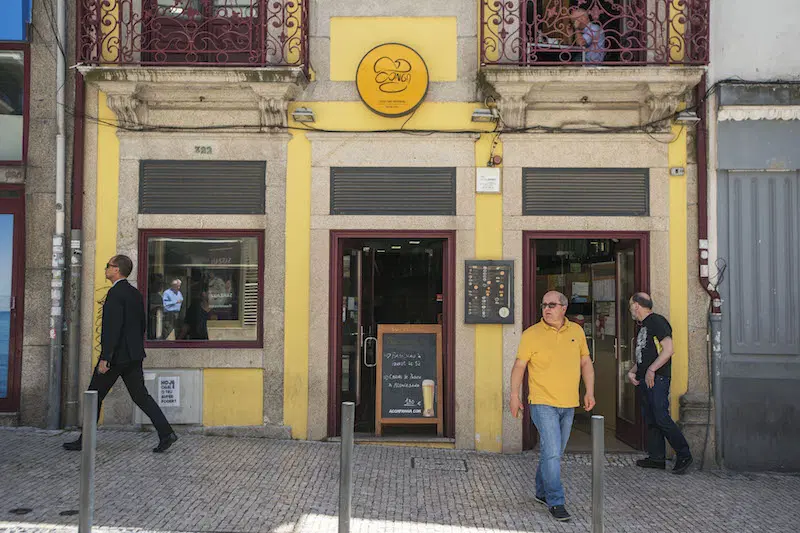
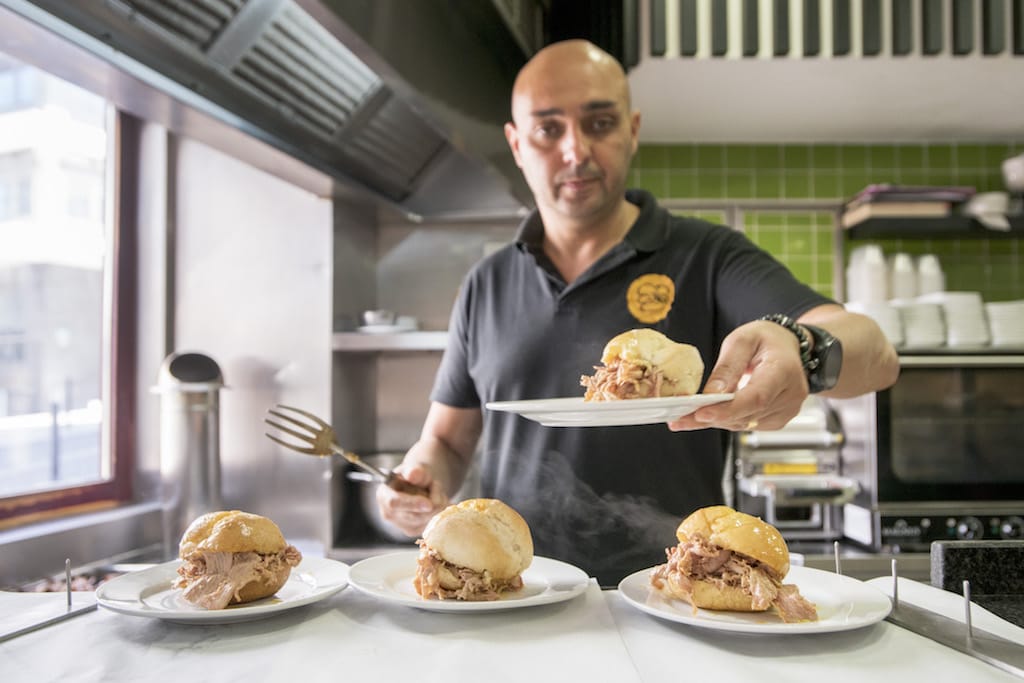
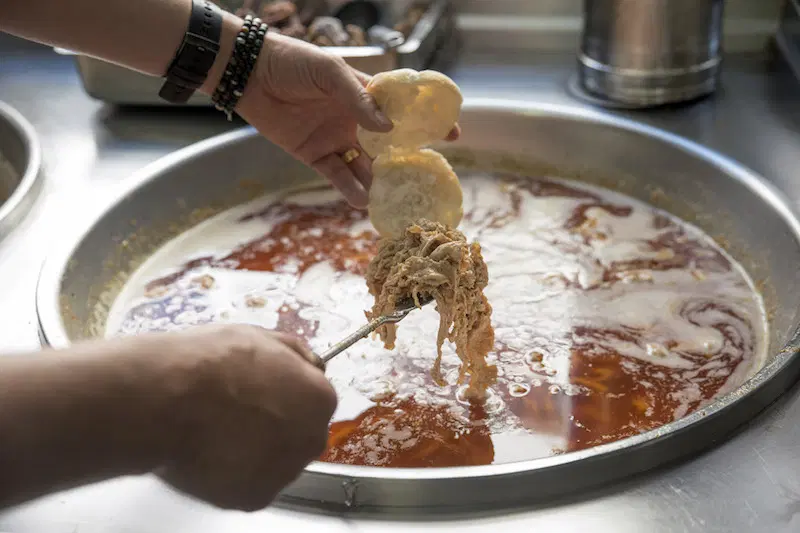
Of course, there are many bifanas — and all over the country. In practically every Portuguese city we find some version: whether the typical fairground sandwich, served with mustard and sauce running down the hand, or the bifana on a plate, accompanied by chips, a fried egg or melted cheese on top — modern adaptations that have also won fans.
But the essence remains: pork marinated until it is flavourful and tender, served in crisp bread.
Each place adds its own special touch. Some swear the trick is to use red wine instead of white in the marinade; others defend the use of pork lard for frying and flavour. Some season with sweet pimentão to give the sauce an orange colour, others go heavy on the garlic.
And so, like our gastronomy itself, the bifana keeps gaining nicknames and styles. It is an obligatory presence on Santos Populares nights and at stadiums before the opening whistle.
The bifana in social life
The bifana was also tied to Portugal’s social history. In the years that followed the Revolution of 25 April 1974, the country lived through days of change and scarcity. The bifana became a quick and affordable meal — pork was relatively cheap and available, unlike other meats, and bread was never lacking.
That is how many tascos and food trucks made a living in those years, selling bifanas wrapped in brown paper to workers from the new factories or to the first audiences at the summer festivals beginning to emerge.
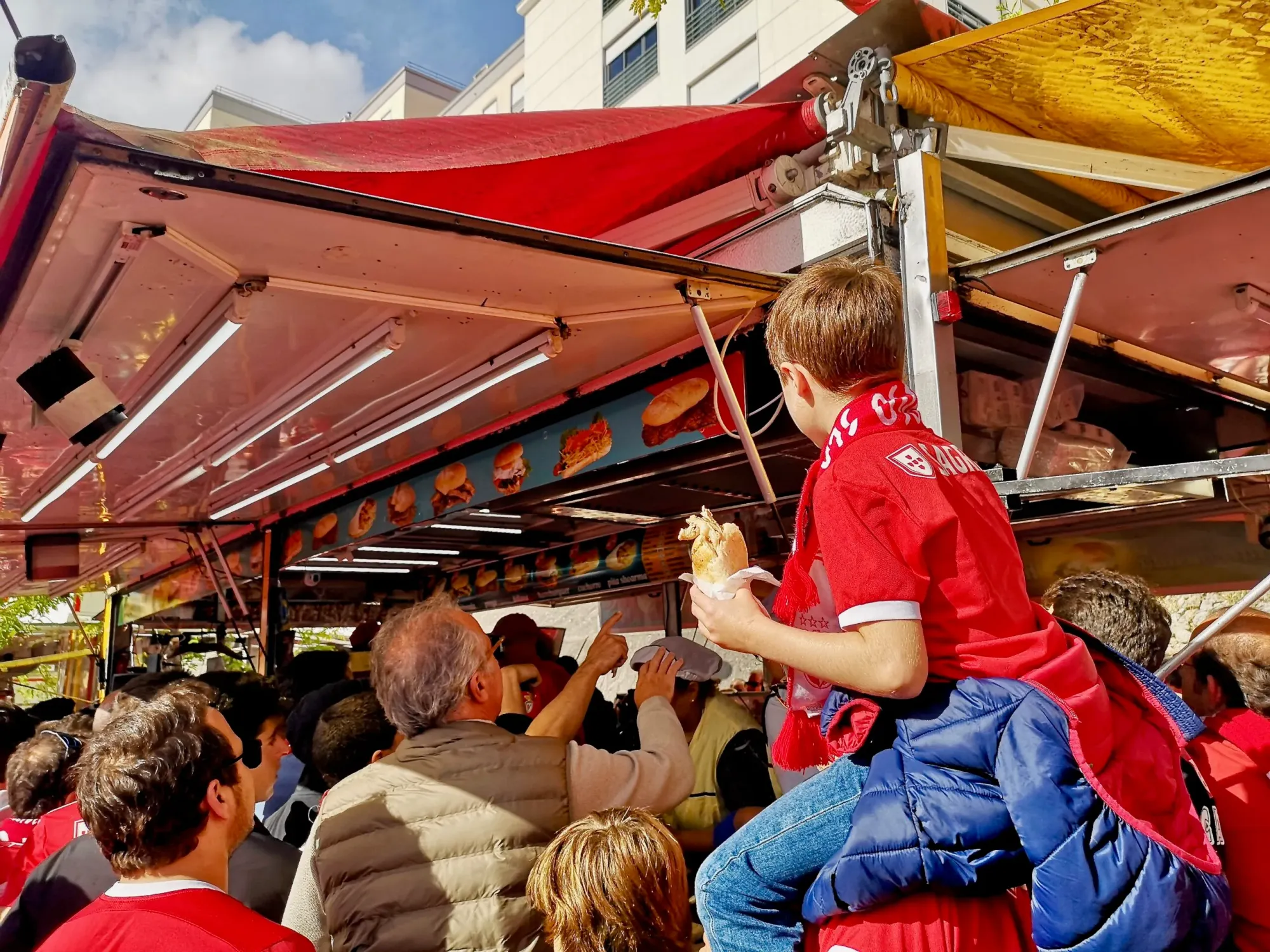
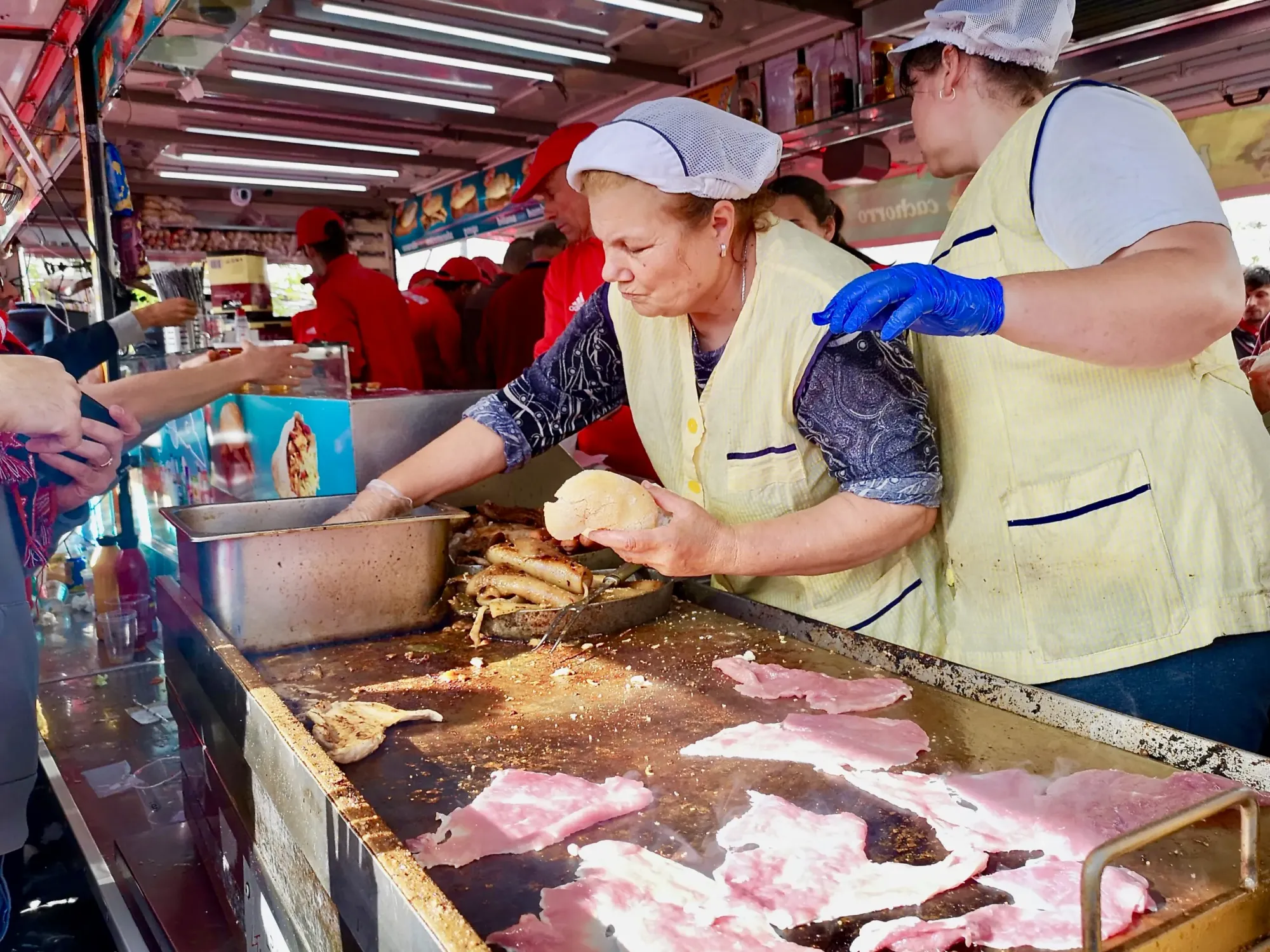
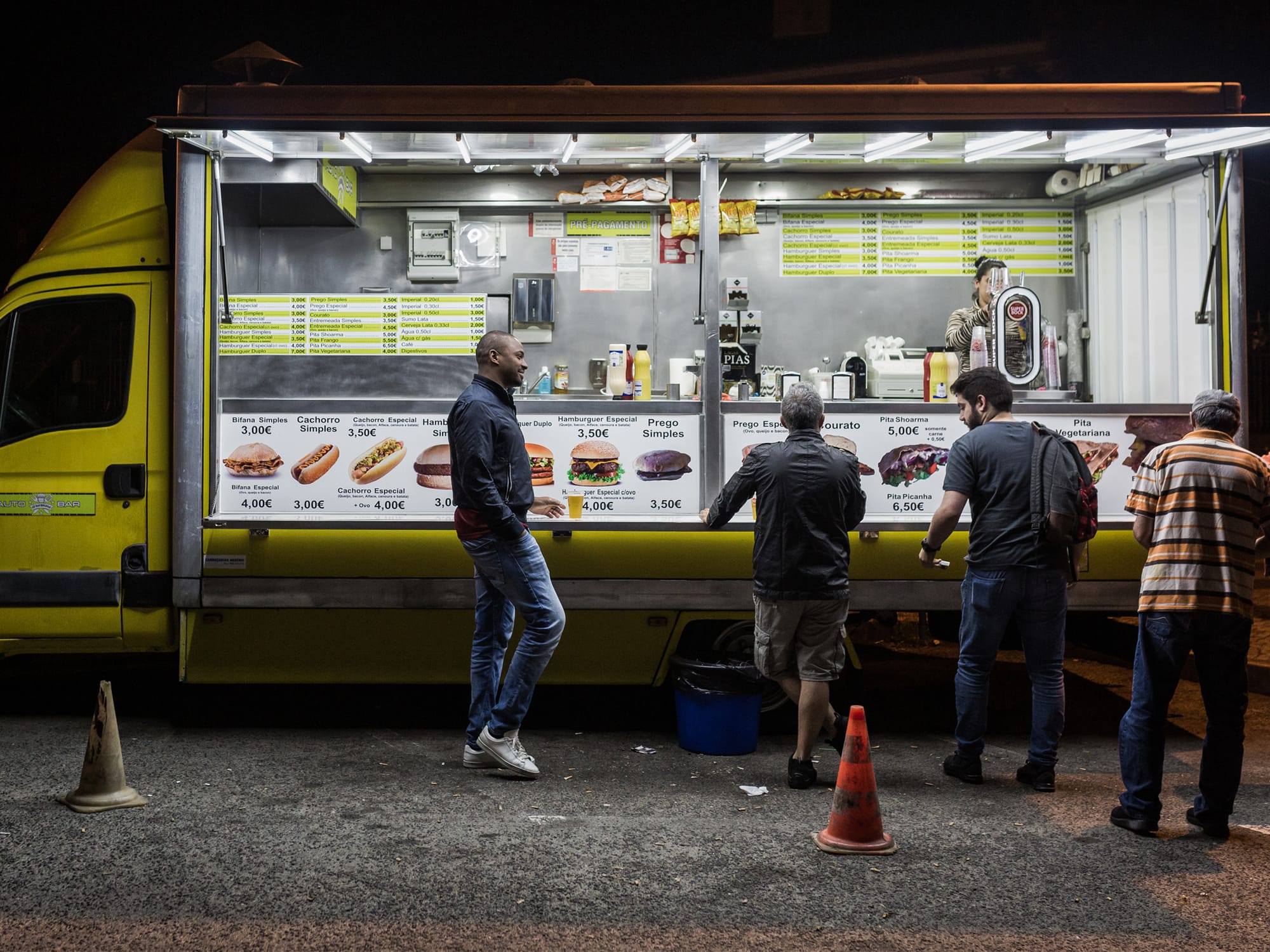
Today, whether at football, at the fair or at popular festivities, it is common to find that bifana food truck: the pan on the flame, the bread piled high, and a handwritten sign announcing “Há Bifanas!”. That scene warms any Lusitanian heart, because it forms part of our collective memory of good moments, simple and tasty.
One sandwich, many stories
The bifana may be only meat in bread, but few foods translate the spirit of Portugal so well: simplicity, hospitality and flavour.
From its likely origins in an Alentejo shop more than half a century ago to the long queues in today’s big cities, this sandwich has accompanied train journeys, saints’ celebrations, football afternoons and festive nights.
Each region gave it a unique touch. Each generation kept a memory attached to it — whether the first bifana at a village festival, or that unforgettable sandwich eaten in a hurry at a railway station.
For all this, the bifana is not merely a snack: it is national gastronomic heritage. Celebrated both in Vendas Novas, where it was born and perfected, and anywhere there is a hungry Portuguese person and a bread roll with a hot febra calling out to them.
The next time you eat a bifana, remember these stories — and bom apetite!