1910: The End of the Monarchy at Fishermen's Beach, Ericeira
5 October 1910. In Ericeira, D. Manuel II boards discreetly at Praia dos Pescadores. The Portuguese monarchy had come to an end.
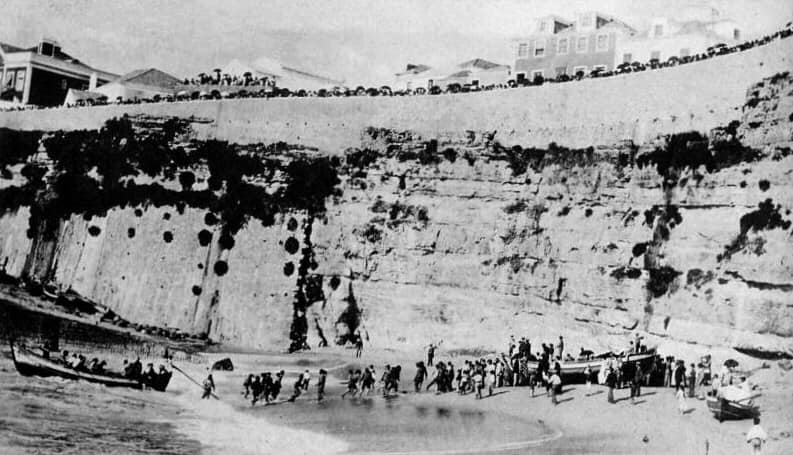
Ericeira, 5 October 1910. The village wakes in silence. At the top of the cliff, hundreds watch, between respect and emotion, as the Portuguese royal family descends to Praia dos Pescadores. King D. Manuel II, Queen D. Amélia and Queen Mother D. Maria Pia walk towards a small fishing boat, ironically named Bonfim. From there they will leave for exile. The sea is calm, but the country has just plunged into a new chapter: the Republic has just been proclaimed in Lisbon.
This symbolic moment marks the end of almost eight centuries of monarchy in Portugal — and the beginning of a new era. But how did we get here? And why did the flight happen precisely through Ericeira?
The tensions that shook the crown
At the end of the nineteenth century, Portugal was going through a period of great instability. The monarchical regime was weakened by political, economic and social crises. Among the people, the feeling grew that the system no longer answered the country’s problems.
From 1820 to 1910, Portugal lived under a constitutional monarchy. In practice, power swung between two parties — the Regenerador and the Progressista — whose ideological differences were minimal. A rotating two-party system set in, where governments alternated without major changes of direction. That political “musical chairs” generated discontent, both in rural areas and in cities. The population was beginning to feel forgotten and disillusioned with the political elite.
It was in this context that the Republican Party began to gain strength. Born outside the system, it first gave voice to the discontented, defending a break with the regime and the building of a new political order based on the Republic, progress and social justice. In the cities, especially Lisbon and Porto, intellectuals, teachers, merchants and workers joined the movement. At the ballot box, republicans began to win seats; in the streets, they prepared the next step: revolution.
The situation worsened under the reign of King D. Carlos I, marked by political instability, successive governments and growing authoritarianism. In 1907 matters came to a head when King D. Carlos I appointed João Franco as head of government with extended powers; the king sought to restore order — but ended up alienating the opposition even further.
Regicide on 1 February 1908 at Terreiro do Paço in Lisbon
Tension reached its peak on 1 February 1908, when King D. Carlos I and the heir Prince D. Luís Filipe were assassinated by Manuel Buiça and Alfredo da Costa in Lisbon, in an open-air attack at Terreiro do Paço. D. Manuel II, the younger son of the king, ascended the throne at only 18, with no preparation to govern.
D. Manuel II: a lonely king on an unstable throne
Despite the tragic circumstances, D. Manuel II began his short reign with a promise of reconciliation. He dismissed João Franco, reopened Parliament and sought to calm tempers. But it was too late. The monarchy could no longer mobilise popular support, and the republican movement was more organised than ever.
Behind the scenes, a revolution was being prepared. On 3 October 1910, the murder of Dr Miguel Bombarda, a prominent republican figure, was the catalyst. In the early hours of 4 to 5 October, insurgent troops took to the streets of Lisbon and met little resistance. On the Tagus, the cruiser Adamastor, commanded by republican officers, bombarded the Palácio das Necessidades, the king’s official residence.
The flight: from Lisbon to Ericeira
Initially, D. Manuel II refused to flee. He is said to have said: “If the Constitution commands me only to let myself be killed, I shall obey it.” But with the palace under fire and the revolution gaining strength, he was persuaded to leave Lisbon.
In the early afternoon of 5 October, the king went to Mafra, where Queens D. Amélia and D. Maria Pia were. He spent his last night on Portuguese soil there, at the Palácio Nacional de Mafra. The next day, seeing the Republic flag raised in the town, he understood that resistance was useless.
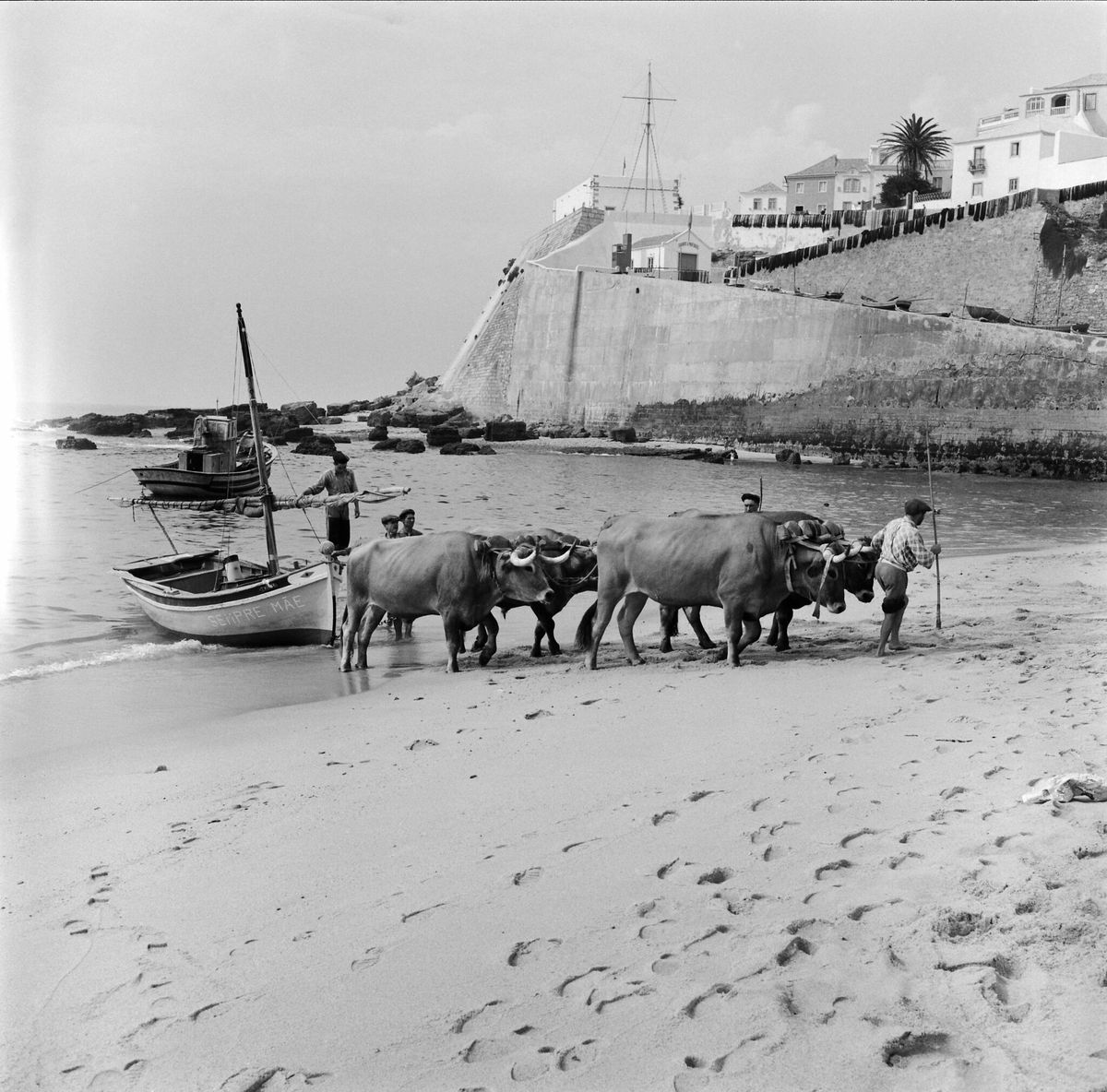
He then decided to leave for Ericeira, where the royal yacht “Amélia” waited offshore. The journey was made by road, with a reduced escort. Arriving in the village, they descended discreetly to Praia dos Pescadores, where local fishermen lent two boats to take them to the yacht.
One boat was called Navegador, where the king went. The other boat, where the queen went, was ironically called Bonfim, in honour of Senhor do Bonfim.
Senhor do Bonfim is an invocation of the crucified Christ, much venerated in Portugal, especially in coastal communities. It is traditionally associated with protection against shipwreck, storms and dangers of the sea; it is common for fishermen to name their boats thus, as a sign of faith and divine protection.
Devotion gained even greater prominence in Brazil, especially in Salvador da Bahia, where the Igreja do Bonfim became one of the country’s largest pilgrimage centres.
In Ericeira and other Portuguese fishing villages, the name “Bonfim” is often given to boats, chapels or images, with the wish for fair winds, safety and a peaceful return home.
It was around four in the afternoon when the royal family left Portugal. Shortly afterwards, aboard the yacht, they set course for Gibraltar — and from there to exile in England.
Royal exile: England and a silent farewell
Received with discretion and respect by the British royal family, D. Manuel II and D. Amélia settled in Richmond, on the outskirts of London. Later they moved to the manor house at Fulwell Park, in Twickenham, where the ex-king lived until his death.
In 1913, D. Manuel married Augusta Vitória of Hohenzollern, but the couple had no children. The ex-king never officially renounced the throne, though he also never tried to restore it by force. He followed events in Portugal from afar, including the frustrated attempts at monarchical restoration.
On 2 July 1932, at only 42, the last king of Portugal — D. Manuel II — died suddenly, victim of glottic oedema. He died at his exile home in Twickenham, on the outskirts of London, England. Curiously, in the same neighbourhood where his mother Dona Amélia of Orléans was born.
The body of D. Manuel II was brought to Portugal and buried in the Pantheon of the Braganças, at the Mosteiro de São Vicente de Fora, in Lisbon.
In the same month the monarchy fell, exactly eleven years later, in October 1951, Dona Amélia of Orléans — the last queen of Portugal — died in France, where she was in exile; her last words were “I suffer so much! God is with me. Farewell. Take me to Portugal!” Her body was brought to the Igreja e Mosteiro de São Vicente de Fora, beside her children and her husband, King D. Carlos.
The end of an era
The flight through Ericeira symbolises the closing of one of the longest chapters in Portuguese history: almost 800 years of monarchy. On 5 October 1910 a new cycle in Portugal’s history began, and it was here, at Praia dos Pescadores in Ericeira, that, symbolically, the monarchy ended and the Republic began.
Today, whoever walks along Praia dos Pescadores may not imagine that it was there, in silence and under the discreet gaze of a village, using a fish crate as a step to climb into the boat, that the last king of Portugal left for exile. The Bonfim, as its very name announced, was the boat that marked that farewell.
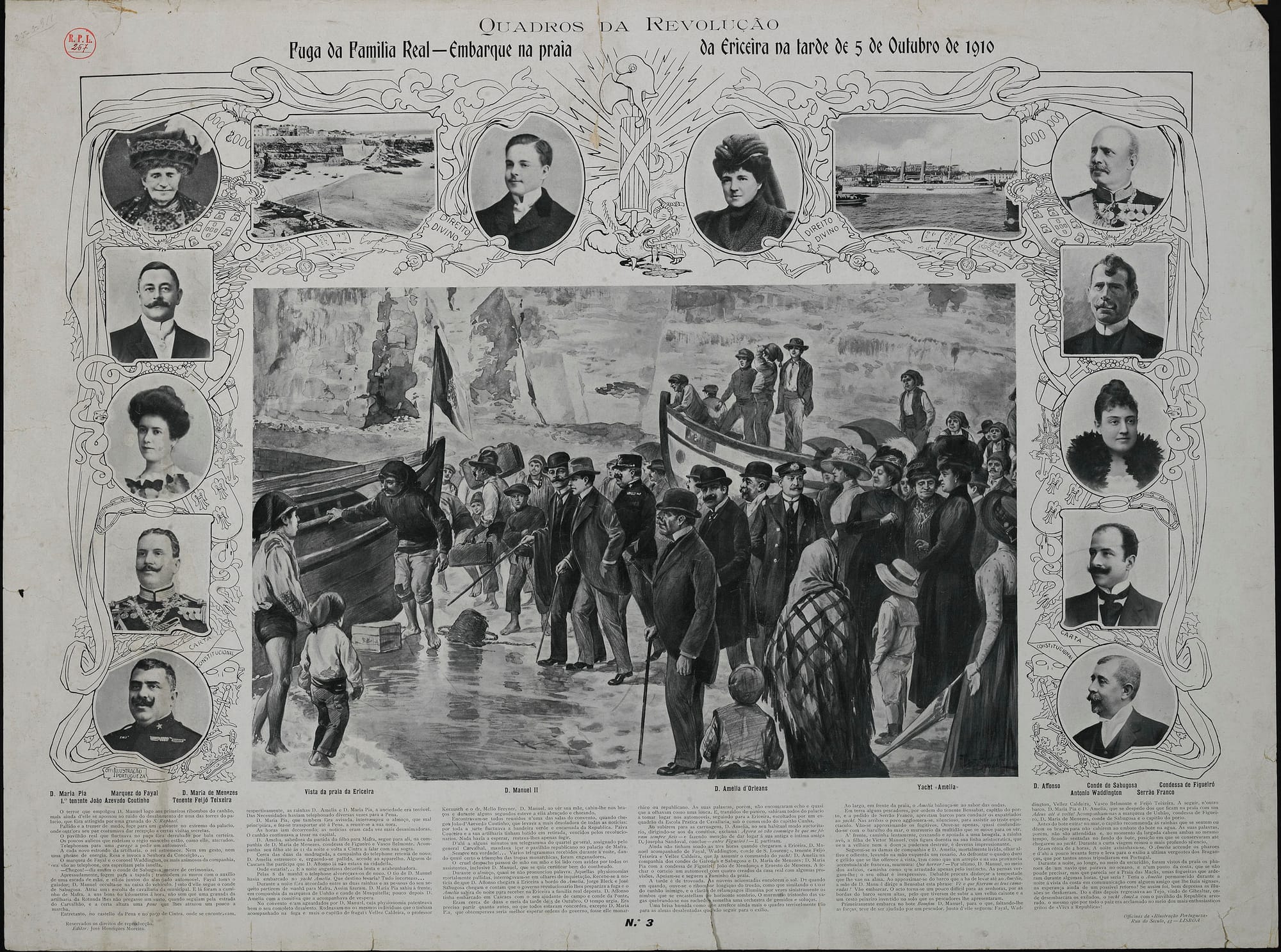
Flight of the Royal Family: boarding at Ericeira beach on the afternoon of 5 October 1910.