Ericeira and World War II Refugees
During World War II, 43,000 refugees arrived in Portugal. They settled in the country's major cities — about 14,000 in Lisbon — but were later sent to smaller towns such as Caldas da Rainha, Figueira da Foz and Ericeira.
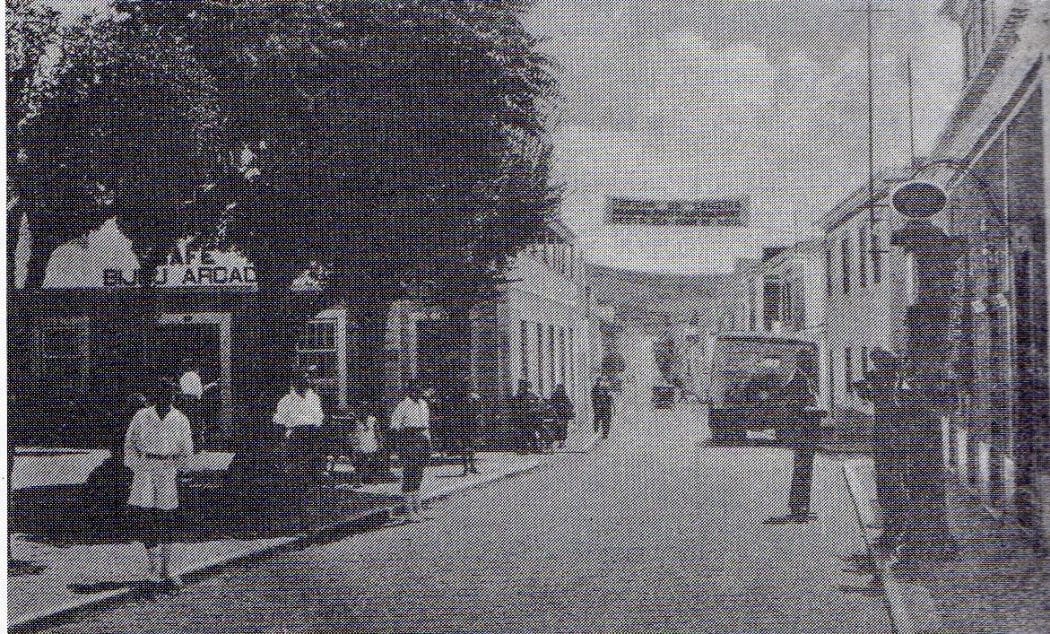
During World War II, 43,000 refugees arrived in Portugal. They settled in the country’s major cities — about 14,000 in Lisbon — but were later sent to smaller towns such as Caldas da Rainha, Figueira da Foz and Ericeira. Salazar’s regime feared political and economic unrest, but this phenomenon had unexpected results: for some it proved an economic success, and socially it became a force for modernisation.
The great influx of refugees to Portugal was due on the one hand to its neutrality in the war and on the other to its being the gateway with easiest access to the much-desired South America and the United States.
many refugees ended up staying in Portugal
The Salazarist dictatorship intended Portugal to be merely a transit country for refugees; however, because of legal visa restrictions imposed by United States immigration, many refugees ended up staying in Portugal. Those who stayed, like Fritz Teppich, were imprisoned for expired visas. Later the PVDE (State Surveillance and Defence Police) released the refugees, sending them to small towns such as Ericeira, under tight surveillance and fixed residence: they could only move a few kilometres away, could hold no political affiliation and were subject to an absolute ban on work.
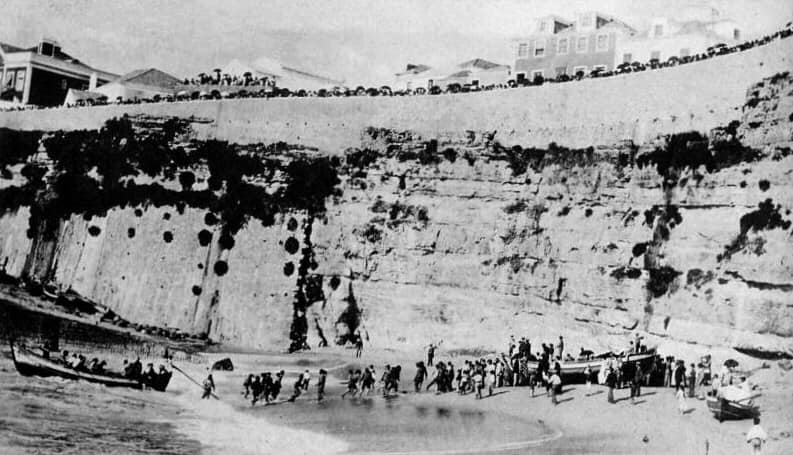
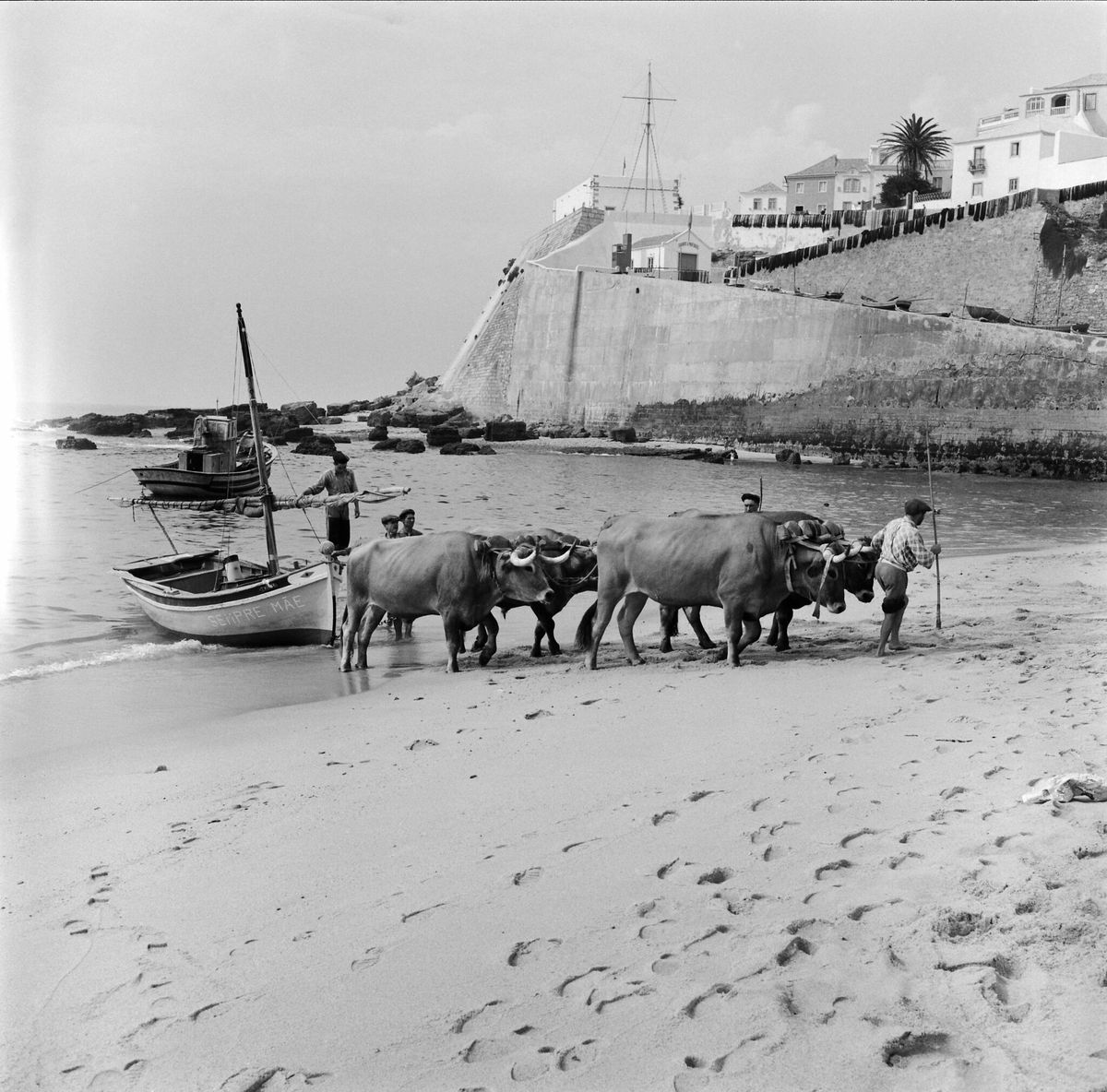
Ericeira in the 1940s, before the arrival of the refugees
In the heart of the dictatorship, Portugal lived under heavy censorship of freedom of expression, a very high illiteracy rate, strong religious fervour, conservative customs and isolation from a modernising Europe.
The refugees brought habits and customs from a more modern Europe. In Ericeira the first contact, at Praça da República — also known as ‘Jogo da Bola’ — was one of shock, but then curiosity followed and eventually emancipation.
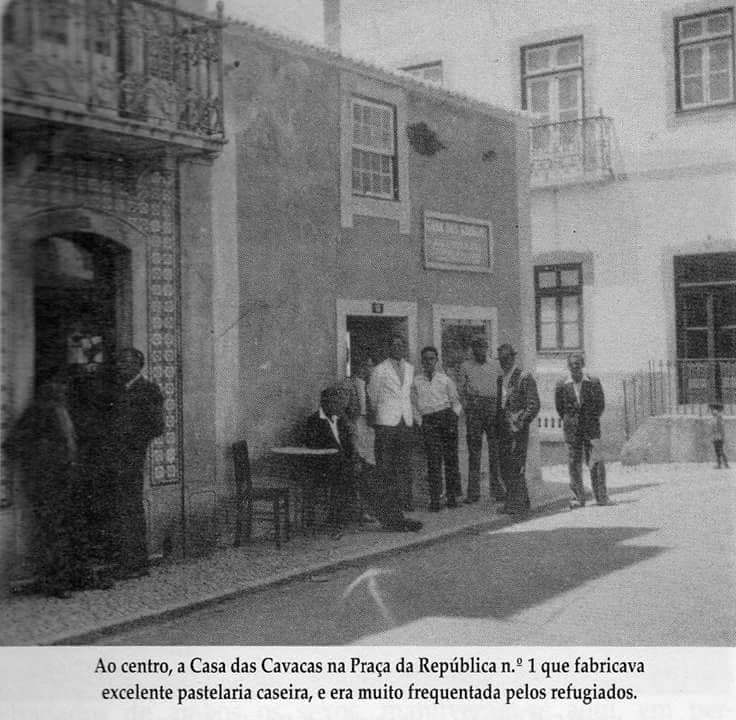
In “Ericeira, 50 Years Later… — Foreign Refugees of World War II”, by José dos Santos Caré Júnior
In 1940, Ericeira had 3,100 inhabitants who (over)lived on artisanal fishing, with small boats moved by oars and sail, and on seaside tourism during the three summer months. Even then, short-term rentals during the bathing season were one of the population’s main sources of income, including for fishermen, many of whom rented their houses to the “senhoritos”.
Before Estoril had the fame of the Costa do Sol, Ericeira’s beaches were the destination for many upper-class families. Hence the name “senhoritos” given to holidaymakers who, during the three summer months, animated the village socially and economically.
Fish was plentiful, but selling prices at the improvised fish market on Praia do Peixe, or Ribeira (today Praia dos Pescadores), were low. During the winter months, still without a fishing port, sea conditions did not allow many trips out to fish. Thus fishermen lived a life of sacrifice all year round.
Who the refugees were
Reaching Portugal was extremely difficult, requiring one of two resources, ideally both: money or strong political or religious support. The wealthiest came by plane, ship or train. Those who came by train arrived at Rossio and could cross a secret passage to the Hotel Avenida Palace to enter Lisbon without any police control. To continue to the United States, the wealthiest chose the Clipper flying boats.
The Yankee Clipper flying boats were the largest commercial aircraft in existence. They had two decks and could carry up to 50 passengers. They moored on the Tagus, at the Cabo Ruivo runway, and flew to New York. Speed of 300 kilometres an hour at an altitude of 2,500 metres. The journey took only 27 hours, much faster than the maritime alternative: a ship that took between ten and twelve days.
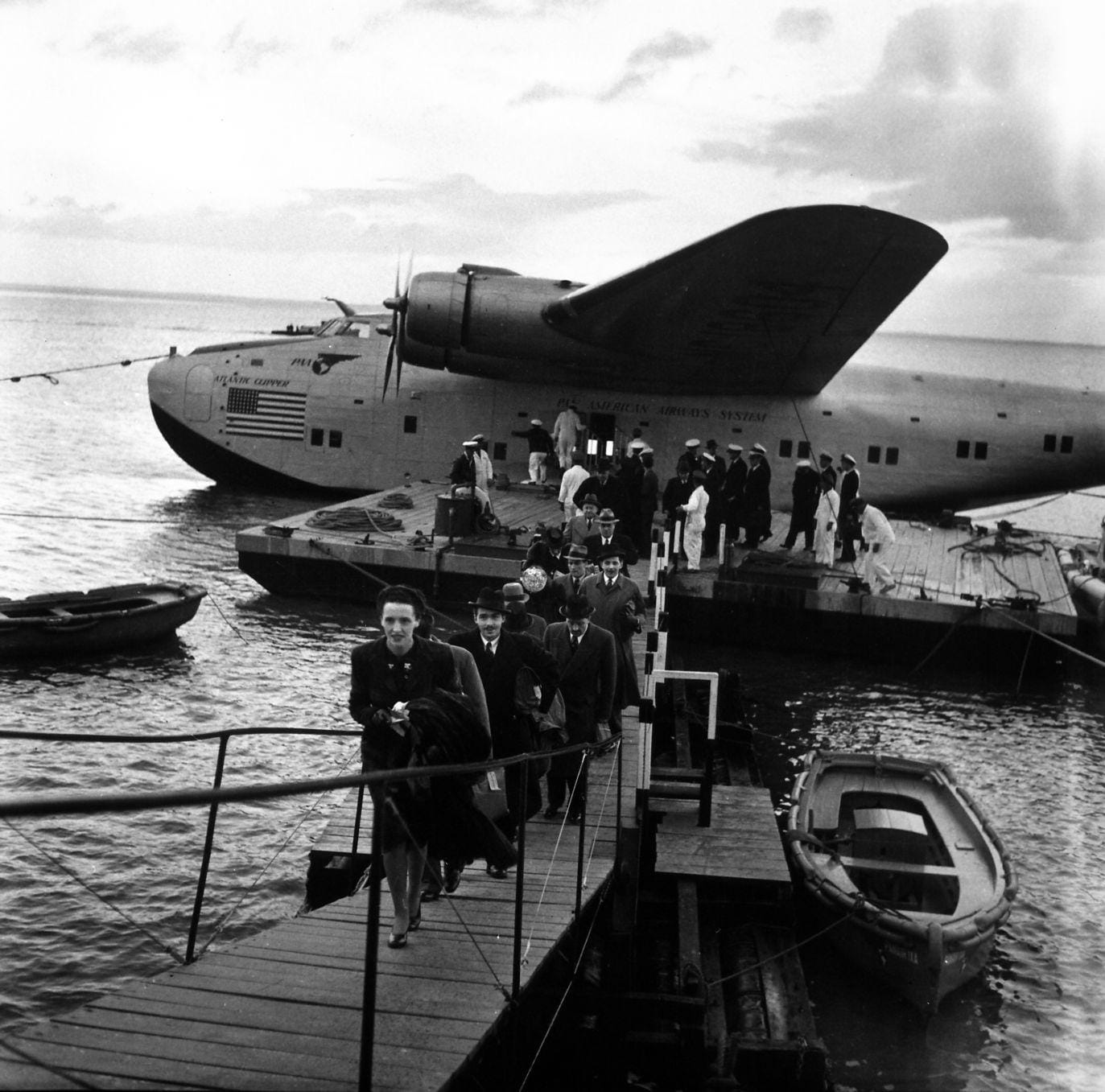
Yankee Clipper at Cabo Ruivo runway, Lisbon
This luxurious service was marketed by Pan American Airways. The price of a ticket, in today’s money, would be equivalent to 8,000 euros. An exorbitance reflected in the luxurious interior of these aircraft: porcelain table service, crystal glasses, caviar, champagne, lounge, dining room, bar and fold-out beds for the crew. Despite the luxury, many stories tell of clients who were seasick the whole journey and did not enjoy the sumptuous food served on board.
Before the war, Lisbon hotels had low occupancy rates. Overnight, the Portuguese capital became a famous destination and hotels overflowed with refugees. “It was not easy to find a room in a Lisbon hotel between 1940 and 1942.” *ª. The Chave de Ouro café on Praça do Rossio was constantly full, shoeshiners always busy. There were foreigners from the Allied nations and others from the Nazi party, all living in the same city. At night, Lisbon was known as the city of light, being one of the few European cities that kept public lighting on. Most European capitals remained in semi-darkness to avoid bombing. Millionaires and celebrities occupied the capital’s luxury hotels. Calouste Gulbenkian was one of them, permanently lodged at the Hotel Aviz.
the Jewish refugee Fritz Teppich wrote the book A Refugee in Ericeira
To reach Portugal one had to obtain a passport, an exit visa, secure transport, cross a Spain (still in the aftermath of a violent civil war) heavily watched by the police and, finally, cross the Portuguese border. The number of refugees who reached their destination was quite small compared with those who wished to do so.
Fritz Teppich, a Jewish refugee, began his flight from Belgium when that country was invaded by German armies. With great effort and after many kilometres, he managed to reach Lisbon. Later he was imprisoned for an expired visa. In prison he met the leader of the Portuguese Communist Party, Joaquim Pires Jorge, imprisoned by the PIDE (International and State Defence Police). Fritz Teppich was sent with fixed residence to Ericeira, where he remained several years, making friends and falling in love. He wrote the book A Refugee in Ericeira, recounting his experience.
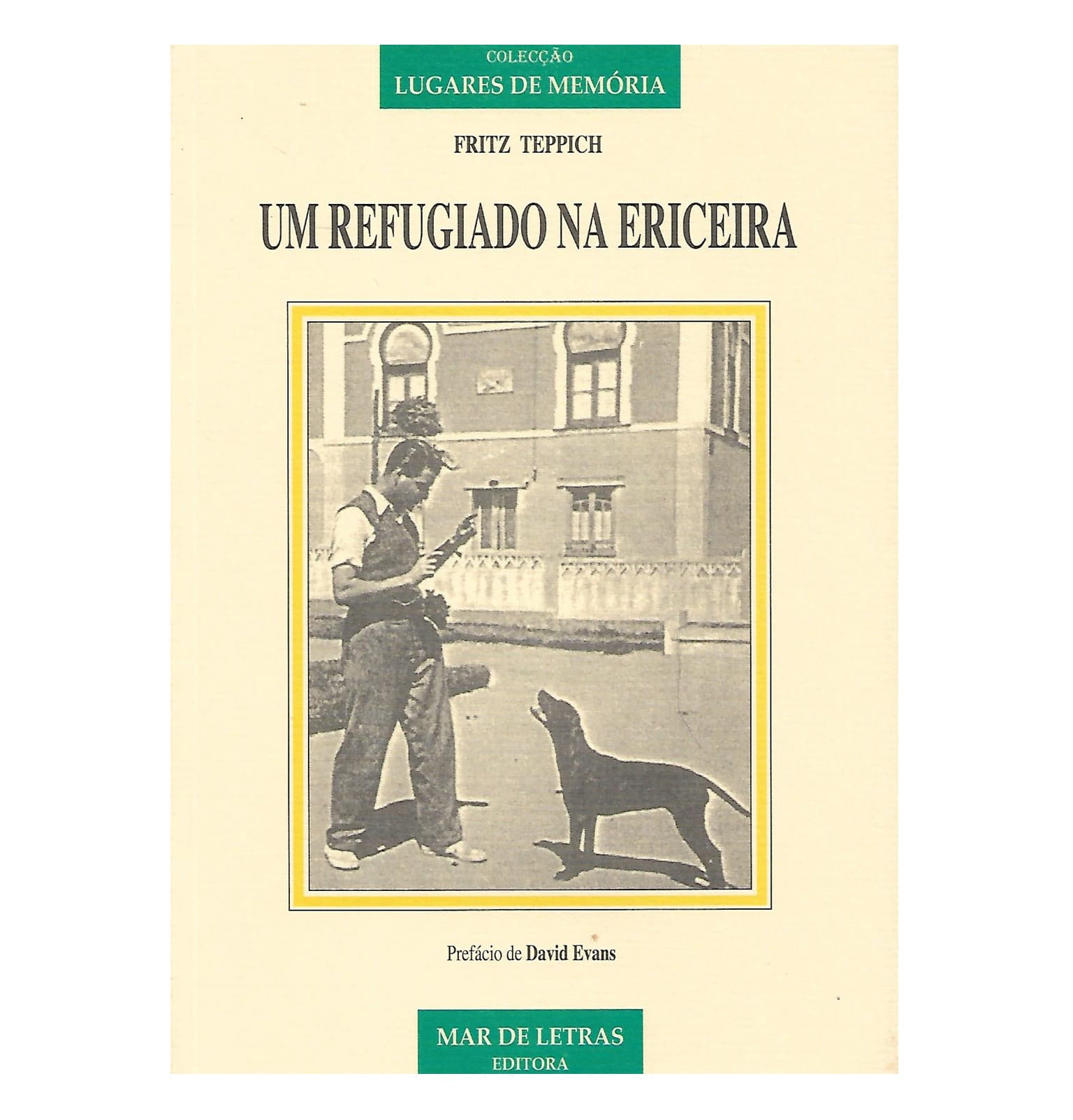
Book, A Refugee in Ericeira by Fritz Teppich
To remain in Portugal, refugees without fortunes relied on support from organisations or religious institutions. The financial aid they received allowed them a economically comfortable life, since they earned incomes well above the average Portuguese income. As Fritz Teppich recounts in his book, “I continued to receive regularly from the Jewish Community the 750 escudos monthly. That would always be more than a prison guard earned and double a worker’s salary.” With this support refugees could consume in the village cafés and bars and stay in private houses or guesthouses, as was the case of Pensão Morais in Ericeira, which received many refugees.
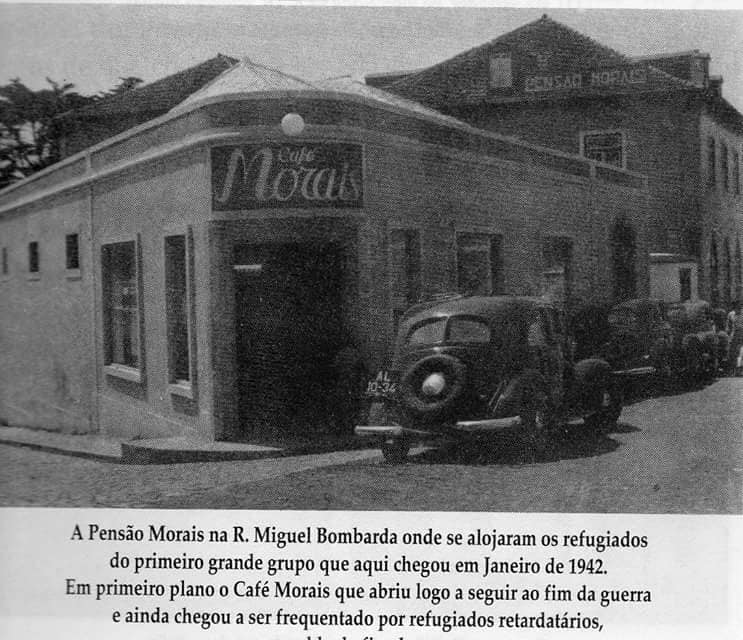
In “Ericeira, 50 Years Later… — Foreign Refugees of World War II”, by José dos Santos Caré Júnior
Refugees in Ericeira
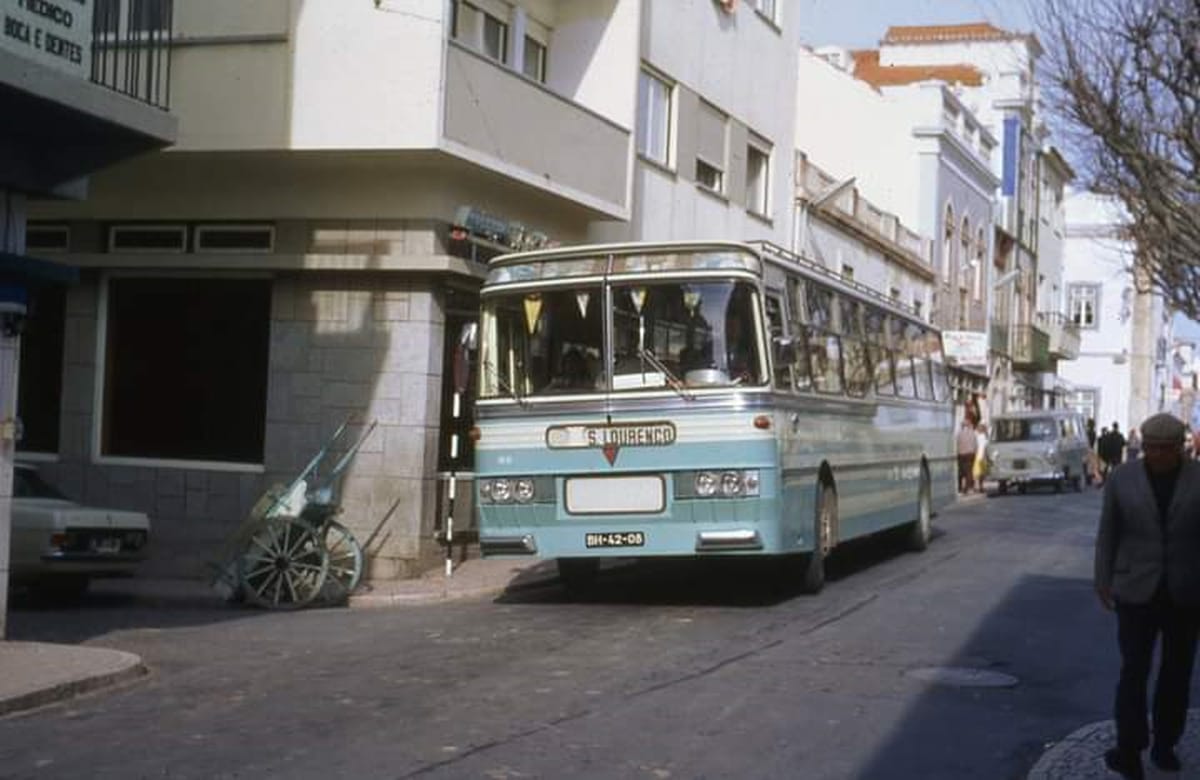
They arrived by bus and got off at Praça da República, still known today as ‘Jogo da Bola’. People of many nationalities, professions and different social classes. A mixture from the various corners of a Europe unknown in Portugal. Many stayed at Pensão Morais, others in private houses. They spent their days at Café Salvador, or enjoying the famous pastries at Casa das Cavacas.
With the refugees’ stay in Ericeira, behaviours appeared that had never been seen before. For example, a young couple kissing in public caused surprise and astonishment. Pre-marital cohabitation of young couples also left many people confused and shocked.
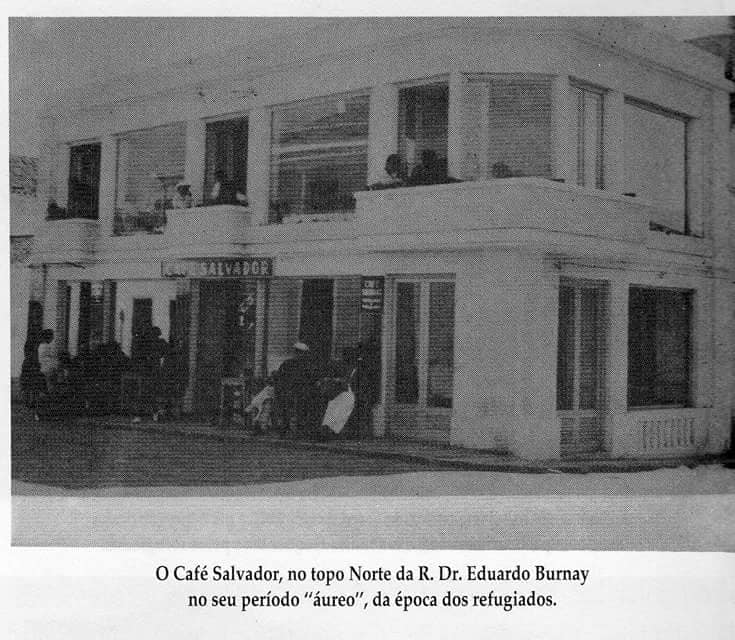
In “Ericeira, 50 Years Later… — Foreign Refugees of World War II”, by José dos Santos Caré Júnior
They caused shock but were never a source of conflict; on the contrary, they became a form of liberation and modernisation of behaviour.
It was at café dances and local recreation societies that refugees began to dance with other refugee women and with local women. Music and dance reduced the cultural and social distance between everyone. It was there that women from outside would, without any ceremony, seek both foreign and local men.
I never noticed envy of us in the village, nor hostility towards foreigners
During the day, many went for walks and were approached by locals who offered lifts, thinking they might be lost or stranded. Only some years later did walking also become a local habit.
By then, in 1942, no girl or woman frequented any of Ericeira’s three cafés (Bijou-Arcada, Café Salvador and Casa das Cavacas). However, as soon as refugee women began to frequent these spaces, local women joined immediately. The same happened with the ponytail hairstyle — quite common for its practicality, it was also quickly adopted by local women.
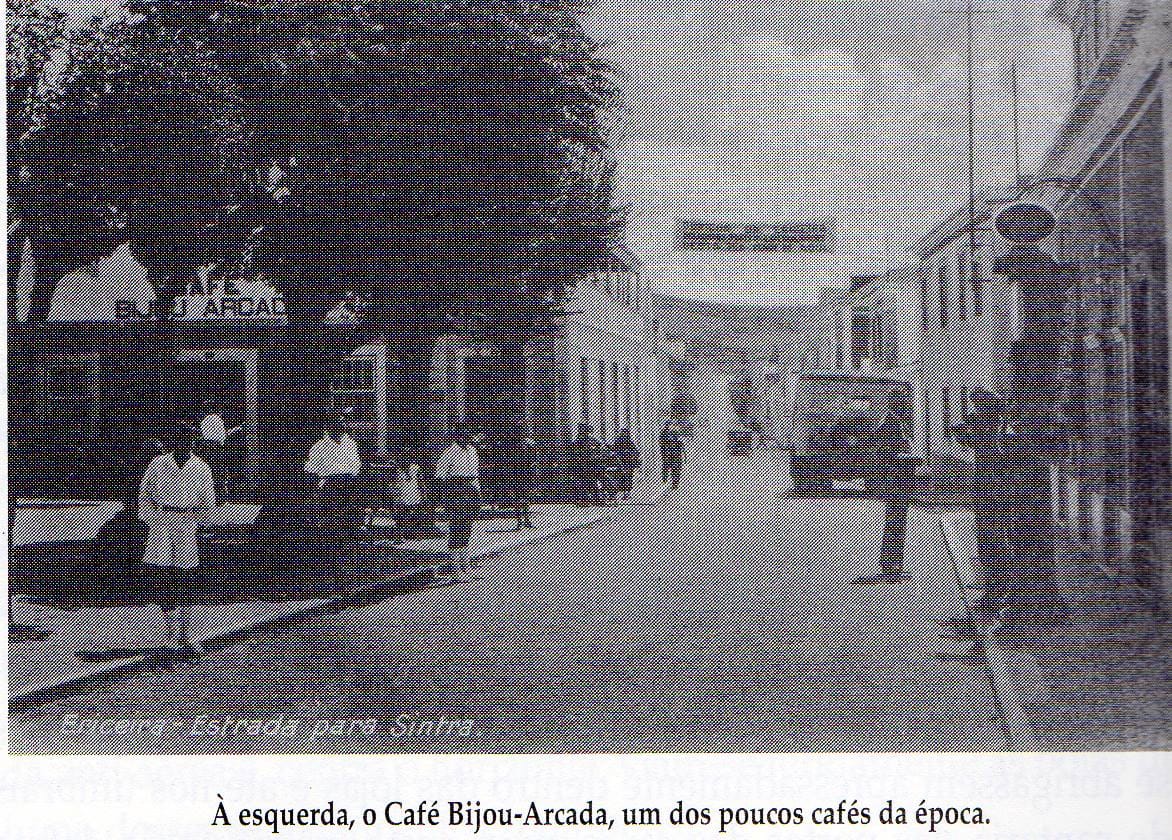
In “Ericeira, 50 Years Later… — Foreign Refugees of World War II”, by José dos Santos Caré Júnior
Fritz Teppich testified that “I did not know anyone among these good people whose whole family came, even remotely, to our monthly allowance. And we still had a doctor and free medicines, and could also now and then request money for clothing expenses.” Despite these contrasts and all the privations that much of Ericeira’s families endured, the author adds, “(…) I never noticed envy of us in the village, nor hostility towards foreigners.”
This village embraced by the Atlantic, caressed by northerly winds and by that blue of the sea stretching north to south was for decades (or even centuries…) a land of few people, few resources and conservative habits. Its people welcomed with open arms others from a very distant Europe with other habits, languages and customs. At first they found it strange, then they made friends and integrated the new ways.
this coexistence helped us free ourselves from the obscurantism felt in our country
The refugees brought a breath of fresh air and economically animated businesses and socially animated the people of this land.
“This same coexistence with other peoples, other nations and other cultures contributed, in a way, to freeing us from the cultural and social obscurantism felt in our country.” Júnior J. 1995 Ericeira 50 Years Later…
*ª Neil L. (2012) Lisbon
Repost: This text was originally published in Azul magazine https://www.ericeiramag.pt/a-ericeira-e-os-refugiados-da-segunda-guerra-mundial/