The Only Survivor of LANSA Flight 508
Juliane Koepcke fell from the sky and walked alone through the jungle for 11 days.
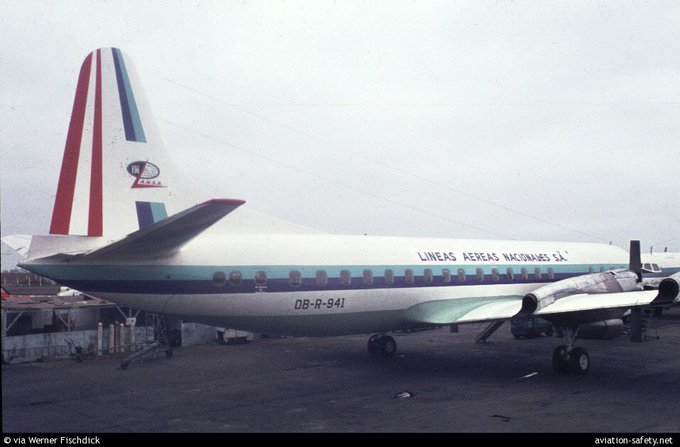
On 24 December 1971, Lima airport was full. Flights to the jungle were leaving one after another, all packed. It was Christmas Eve and nobody wanted to be left behind. There was a shared urgency: get home in time.
One flight remained to Pucallpa, operated by LANSA. The airline had a reputation that was hard to ignore. In previous years there had been serious accidents, and the name was associated with technical failures and poor decisions. It was not the kind of flight you chose with confidence — it was what you accepted when there was no alternative left.
Juliane Koepcke was 17 and travelling with her mother. They wanted to return to the biological research station in the Amazon, where her father was waiting for them for Christmas. He had left a clear warning: avoid LANSA.
At that moment, the warning seemed less practical than urgent. Around them, seats were disappearing, time was running out. It was the last available flight. There was an aircraft. There were two seats. And that was enough.
The flight
The first minutes of flight pass without incident. The aircraft gains altitude and stabilizes. Nothing suggests this flight will be different from so many others.
As they advance eastward, the sky closes in. Clouds become dense and dark, until the aircraft enters the storm. Turbulence begins. At first it is only bumps. Then they grow stronger. The aircraft shakes, sways. Conversations stop.
Juliane is by the window. Outside, she sees only darkness interrupted by lightning. One bolt strikes the aircraft. The flash is immediate. A dry sound. For an instant, everything seems suspended.
And then it stops responding. The angle changes, movement becomes irregular. What was turbulence becomes loss of control. The descent begins. The interior reacts — objects come loose, the body is pulled by the seatbelt, space stops making sense.
And then, abruptly, everything disappears.
Juliane remains strapped to her seat — but the aircraft is no longer there.
“I had not left the aircraft; the aircraft had left me.”
In an instant, she is in the air. Still in her seat, still with the seatbelt tight, but with nothing around her. No fuselage, no wings, no cabin.
“I was suspended in the air, still in my seat… I was alone… and I was falling, cutting through the sky… about 3 kilometres above the ground.”
And then she loses consciousness.
Alone in the jungle
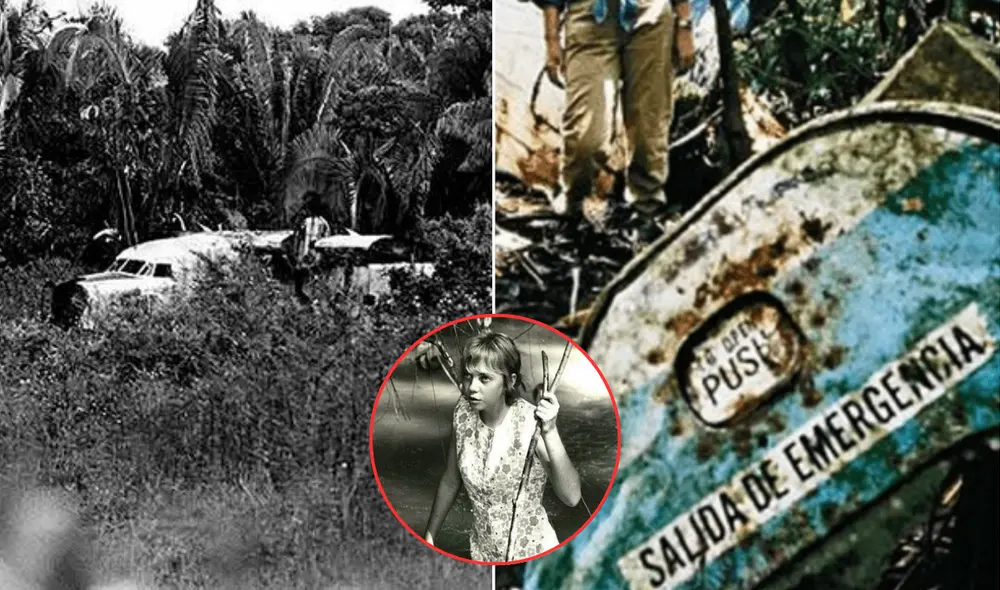
When she comes to, there is no longer any movement. She is lying on the ground, covered in mud, with light filtering through the trees. For a few seconds, she does not understand where she is. Later it would be known that she may have spent almost an entire day since the fall. There, however, there is no way to tell.
She gets up for a moment and realizes she is alone. There is no aircraft, no voices, no sign of other people. She has lost her glasses. She is injured, but the pain arrives from a distance. She calls for her mother. There is no answer.
She searches around for some sign, but does not find much. The jungle has absorbed almost everything. Only a few scattered objects. Among them, she finds a small bag of sweets. She keeps it.
For some time, she still hears aircraft in the distance. The sound passes above the trees, distant, with no clear direction. She lifts her head whenever it happens, as if that might make a difference. But there is no way to be seen.
Then a memory surfaces. Her father had explained a simple rule to her:
“If you get lost in the jungle and find running water, stay near it, follow its course. It will lead you to other people.”
Following the water
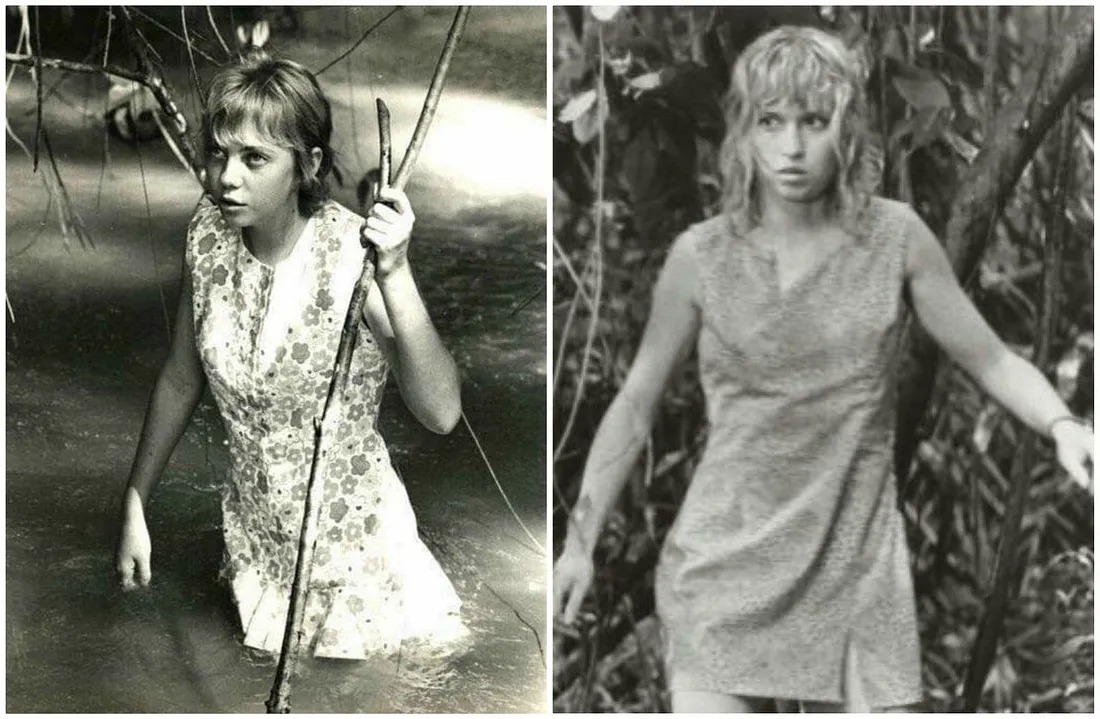
Juliane gets up. She does not know if it will work, or how long it might take. But it is the only direction she has.
Later, recalling those days, she said:
“I was not afraid and I did not feel pain. I only knew one thing: I had to get out of here.”
The first steps are short. Without glasses, everything appears blurred. Vegetation closes around her. There are no paths, no openings. The heat is constant and insects are always present.
The water stays nearby, sometimes visible, sometimes almost hidden. Juliane follows it, adjusting her pace to what her body allows.
She has a small bag of sweets with her. She eats one now and then. It is the only thing she has. She drinks water from the river.
She does not think much about what she is doing. There is no plan for the next day, no clear idea of how long this might last. One step, then another, following the water.
Fourth day
On the fourth day, she sees the vultures first. The smell arrives shortly after, heavy, hard to ignore.
Further ahead, she finds a row of three seats driven into the ground. They are buried upright, as if thrown with enough force to pierce the earth.
She approaches slowly. She picks up a branch and touches one of the feet. She turns it slightly. The nails are painted. She stays there a moment. It is not her mother.
The wound
As the days pass, she notices several injuries, but one in particular stands out: a deep cut on her arm, open since the fall, that never closed.
At first it is only discomfort. But gradually something changes. She lifts her arm and looks more closely. There is movement. Inside the wound, something stirs. Maggots.
Later, she would describe that moment:
“I was watching my own body become food, decomposing while I was still conscious.”
She stays still for a moment. She does not react. She lowers her arm.
And keeps walking.
The first sign
On the tenth day, the water is wider and slower. At several points, Juliane stops walking along the bank and enters the current itself, moving through the river or letting herself be carried for short stretches. Movement continues, but with less control.
It is on one of those bends that she sees something different. At first she does not understand what it is. She approaches slowly, until it becomes clear: it is a boat.
She stays there a few seconds. Then moves a little further and reaches out. She touches it. It is solid.
She looks around. There is nobody. Above the bank, there is a narrow path climbing through the vegetation. She tries to follow it. The climb is short, but it takes time. Her body no longer responds as before. She supports herself with her hands, moves slowly, until she reaches the top.
Up there, she finds a hut. It is simple, open, with few objects inside: tools, an outboard motor, a canister. There are no signs of whoever lives there, only the recent presence of someone who is not.
Juliane enters. For the first time since the fall, she can stop.
Gasoline
The wound on her arm is worse. Inflamed, open, impossible to ignore. She remembers something she had seen before at the biological station where her parents worked: similar wounds treated with fuel to expel parasites.
She looks at the canister. Approaches, opens it and tilts it carefully. The smell is strong. With her other hand, she brings a little of the liquid to the wound.
For a moment, nothing happens. Then the reaction. The pain is immediate, intense. She stays still, waiting for it to pass, without pulling her arm away. Shortly afterwards, they begin to come out. The maggots leave the wound, forced out by the liquid.
Juliane watches. There is no hurry or immediate relief. Only the sense that, for the first time since the fall, she has done something to change what was happening.
The voices
After some time in the hut, she hears voices. At first she does not react immediately. For days, there had been moments when she thought she saw or heard things that were not there. She stays still, listening, not knowing if it is real.
The voices approach. They come from the vegetation, from the path down to the river. Indistinct at first, but enough not to be ignored. Juliane gets up with difficulty and leaves the hut.
Shortly afterwards, she sees them. Three men, loggers, returning to the place. When they see her, they stop. For a moment, nobody approaches. Her appearance — covered in mud, wounded, red eyes — matches nothing they expected to find there.
Juliane speaks first:
“I’m a girl who was in the LANSA accident. My name is Juliane.”
The distance remains for a few seconds. Then one of them advances. They speak little. Not much is needed to understand what happened. They help her sit down, clean the wounds as they can.
Hours later, they take her by boat along the river to the first inhabited point.
For 11 days, she did not know if she was heading in the right direction. She simply kept walking. She was the only survivor among 92 people.
“The jungle caught me and saved me. It was not its fault that I landed there.”
Days later, they found her mother. She had survived the fall, but could not get out of the jungle.
Afterwards
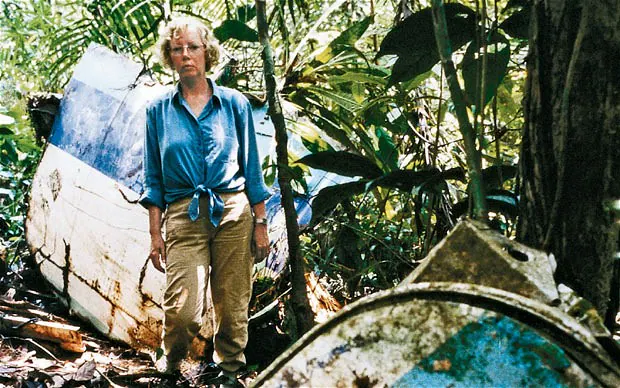
Later it would be known that the aircraft had been struck by lightning, causing an explosion in one of the fuel tanks. The structure began to fail still in the air.
The flight had entered a severe storm directly — something that should have been avoided. The airline, LANSA, already had a history of accidents and operational problems, with maintenance and safety control practices frequently cited as insufficient. It would close the following year, in 1972.
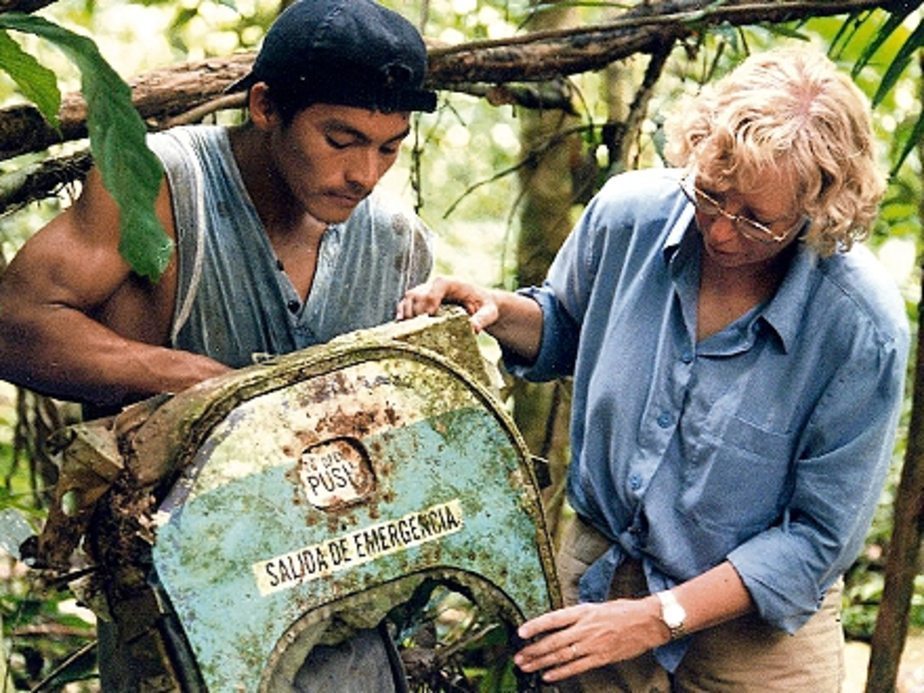
Years later, Juliane Koepcke would write about what happened in When I Fell From the Sky (Als ich vom Himmel fiel), published in 2011. Her story was also portrayed in the documentary Wings of Hope (1998) (Juliane’s Fall in the Jungle), by Werner Herzog.