An 89-Year-Old Woman Was Declared Dead Before Takeoff
But passengers say she was already dead when she boarded
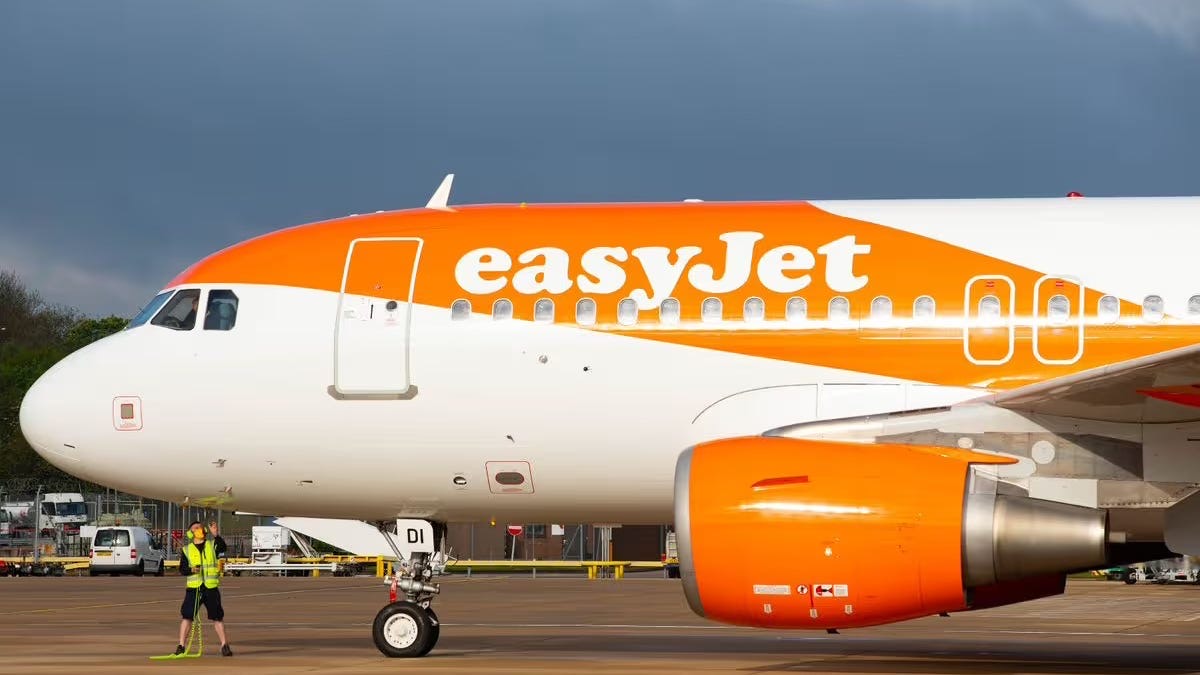
Málaga Airport, Friday 22 December 2025. An 89-year-old British woman arrives at the gate for easyJet flight EZY807, scheduled for 11:15 to London Gatwick. She is accompanied by two relatives, who push her in a wheelchair along the boarding queue. At first glance, nothing seems out of the ordinary. But as the line moves forward, eyes begin to fix on her.
“She was a frail lady… hunched over, folded in on herself.” That is how passengers described her, almost in whispers. One detail repeats across accounts: her head drops and her body does not react, with no voluntary movement at all.
As the queue advances, whispers begin among passengers who do not know each other. Something is wrong, but nobody can define exactly what. Later, the airline will state publicly that everything was in order: there was a “fit to fly” certificate.
After the gate, the usual flow begins, with passengers entering through the jet bridge. She moves with that crowd, in the wheelchair, pushed and accompanied by her relatives. The distance is now minimal, and people see her pass within inches.
Already seated inside the plane, some passengers watch as she enters, and among muffled whispers comes something clear: “Oh my God, she looks dead.” The reply from the relatives is quick:
- It’s fine, she’s just tired
Then they add, as if to reassure:
- It’s fine, we’re doctors!
Boarding continues. More people enter, more looks.
And then another wave of comments. Some passengers notice a detail they cannot ignore: someone is holding her head so it does not fall to one side. The two relatives place the 89-year-old woman in a seat at the back of the plane. She remains motionless. No reaction. Body slumped, collapsed on itself, while her head drops again.
One comment captures the shared feeling: “Anyone with eyes could see she was not fit to fly.” Boarding complete, 11:15, the door is closed. The aircraft begins to move slowly, pulling away from the jet bridge. The sound of the engines rises, still restrained. While taxiing toward the runway, the woman at the back stays exactly as she was: body slumped, no visible reaction. Some passengers look again. Not out of curiosity — out of the sense that something is not right.
During the exit maneuver, a passenger hears the relatives comment quietly: “there may be a problem.” They try to give her water and call her name. No response. They end up calling the cabin crew. They approach the seat, observe carefully and exchange a few words in low voices, staying there longer than would be normal. Shortly afterwards, the aircraft slows and changes direction, heading back to the terminal. The captain makes an announcement, saying a medical emergency has been requested on board. Without giving further details.
The reaction among passengers is immediate: “Well, we know why.” The aircraft is already stopped beside the terminal. The door opens and an airport medical team boards.
Minutes pass until information begins to circulate — first in whispers, then more clearly. The woman has been declared dead. A passenger seated very close to the victim shares later: “None of the relatives seemed upset or in panic, they were not crying or in shock — they were completely calm and talking to the paramedics.”
Another passenger adds: “They did not show a single trace of emotion. They seemed to be trying to make everything look normal.”
And that is when the story splits. On one side, the airline’s official version: “The passenger unfortunately passed away after boarding.” On the other, several passengers say the opposite: “She was already dead.” Others reinforce: “Anyone with eyes could see she was not fit to fly.”
However, a passenger seated practically beside her — separated only by the aisle — describes something different. He says he saw her breathe, that she seemed very frail, but alive.
Passengers left the aircraft and had to wait twelve hours. Only at 22:30 did they board again. During the long wait, passengers asked themselves: “How did they let her onto that plane?”
The exact moment of death was never fully clarified. Did the 89-year-old British woman die before entering the aircraft, or on board, moments before takeoff?
Shortly afterwards, the internet reacts
And, as always, the reaction is not one. On Reddit, comments appear almost immediately:
“Don’t bother my grandmother, she’s dead tired.”
“Maybe she died in the boarding lounge and they thought ‘screw it, we’re going on holiday anyway.’”
“To be fair, they were probably trying to get her home on the original ticket.”
“I paid for 5 seats, I’m using 5 seats.”
“You don’t hear about it when it works out, because ‘Weekend at Bernie’s’ is a movie, not real life.”
“This is what she would have wanted.”
“Did she have to go through the security scanner on a tray?”
A curious fact
International transport of human remains is not simple. Between countries, it involves death certificates, health authorizations and, in many cases, mandatory embalming. It is done in specific coffins and, in most situations, on cargo flights.
According to funeral industry sources in the United Kingdom, the cost can range between £3,000 and £6,000.