It Took Off. And Nobody Understood Why.
For more than an hour, he spoke calmly with the tower… while flying a plane that should never have been in the air
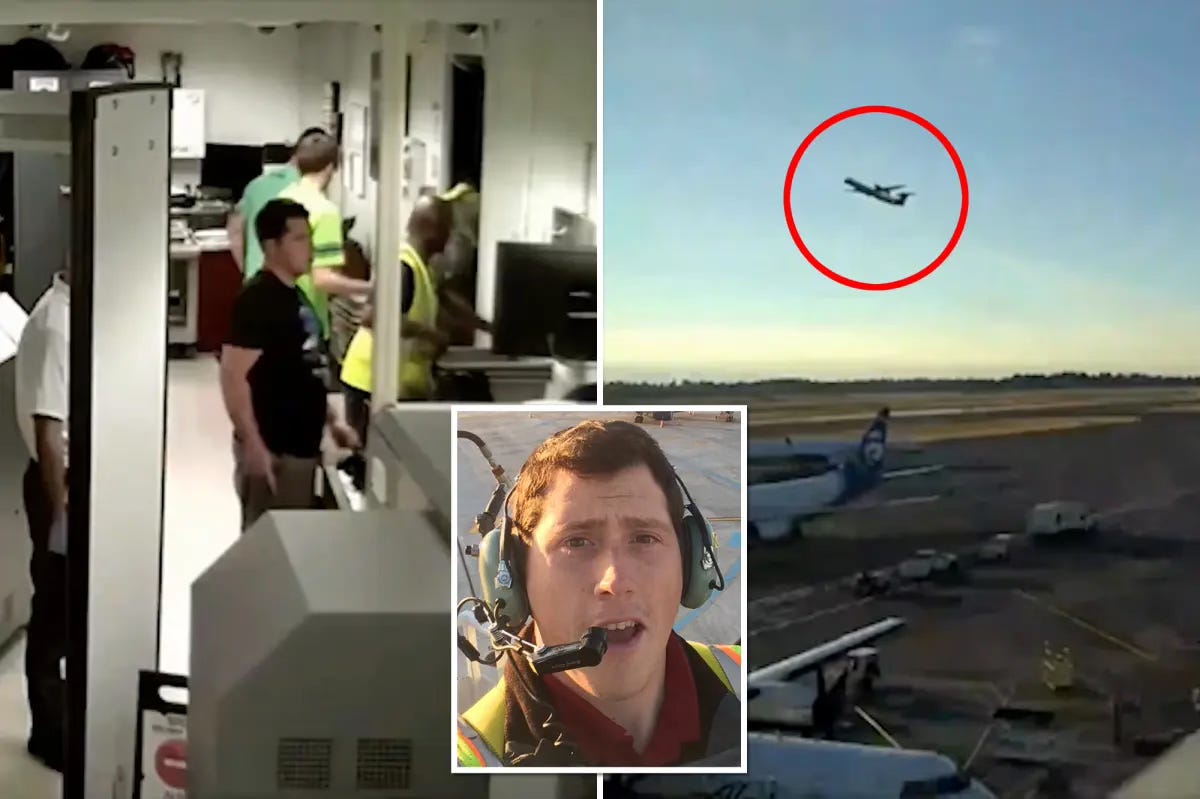
Friday 10 August 2018, Seattle, United States. Richard Russell clocks in at Seattle-Tacoma International Airport at 14:36. He passes employee security, shows his badge and goes inside like on any other day. Security camera footage shows Richard wearing a black T-shirt with the phrase “the sky’s no limit.”
On his back he carries a backpack and begins his shift. Over the following hours, there is no unusual behaviour, no sign of what is about to happen.
Five hours later, in the late afternoon, Richard can be seen walking in a remote area of the airport, in the cargo zone at the far north. There he finds a Bombardier Q400 parked, with no passengers and no crew.
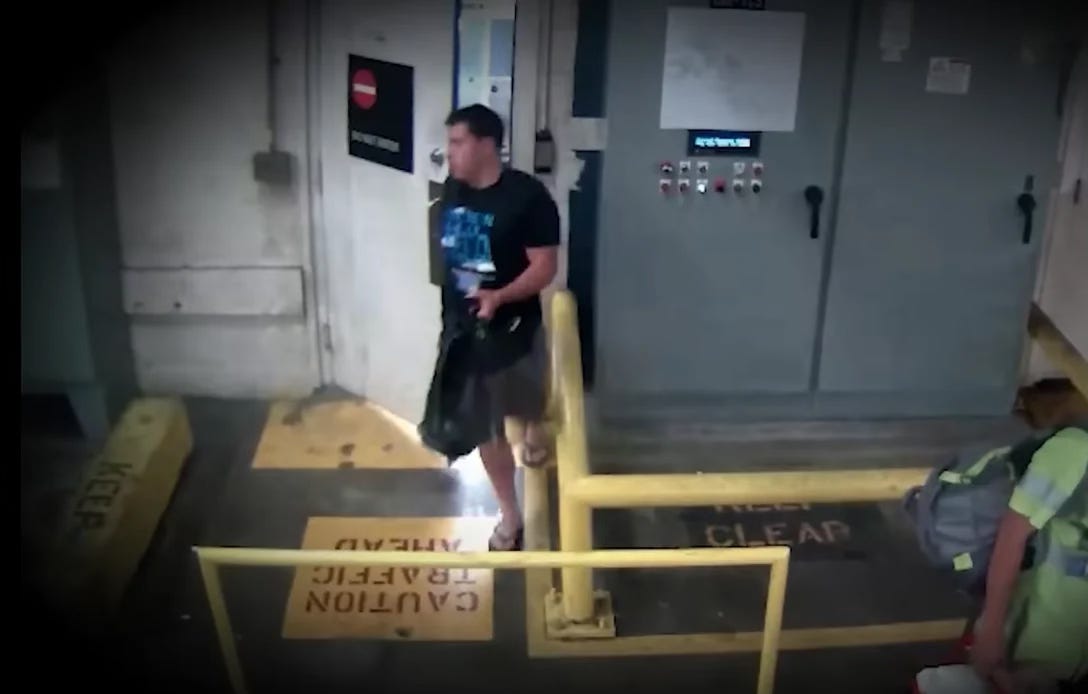
Richard approaches the aircraft with a tow vehicle. From a distance, nothing looks strange — this is exactly the kind of operation that happens every day.
Russell uses the tow vehicle to pull the aircraft and align it with the runway. The plane begins to move, with nobody in the cockpit. He disconnects, gets out of the tow vehicle, runs toward the aircraft, opens the door, climbs in quickly and pulls it shut behind him, disappearing into the cockpit.
The aircraft keeps moving along the airport taxiways. From a distance, nothing particularly draws attention. Planes move constantly — towed, aligned, prepared for departure. This one seems like just another. But a detail begins to raise doubts: there is no communication with the tower. No request for clearance. No identification. No flight plan linked to that movement.
Controllers begin trying to make contact, first as they always do, assuming it is only a delay or a momentary failure.
— Aircraft on runway 16C, state intentions.
On the other side, silence.
The aircraft keeps advancing, now aligned with the runway, as if following a procedure nobody authorized. On the frequency, other pilots begin to notice. Some watch from their own cockpits, others hear the tower’s insistence.
And then someone says what changes everyone’s perception: there is only one person in the cockpit. But it is not a pilot — it is Richard Russell holding the controls for the first time, with the aircraft already in motion.
It is now perfectly aligned with the runway. From outside, the situation definitively stops looking normal. There is no takeoff clearance, no confirmation from the tower, and yet the aircraft keeps moving.
Controllers insist, now with urgency:
— Aircraft on runway 16C, state intentions.
The aircraft accelerates, passes decision speed — it can no longer brake safely — stays stable on the runway and, a few seconds later, lifts its nose, and takes off.
For a few moments, there is silence. And it is at that moment, already too late for this to be merely a mistake, that a voice finally appears on the radio, calm, almost detached from the moment:
— I’m a ground service agent… I don’t know how to land this thing.
A ground worker has just taken a commercial aircraft into the air — with no plan, no training, no clear way back to earth.
The aircraft moves away from the airport and begins to gain altitude.
During the first minutes, there is no attempt to return, no request to land, no destination. In the tower, the priority changes. It is no longer about understanding what happened, but about preventing the worst. They try to talk to him, keep him in contact, buy time.
On the other side, the answer comes.
— I found myself in a bit of a tight spot… I’m up in the air right now, just kind of flying around.
The tower responds almost immediately:
— You just took off?
— Yeah, I’m in the air right now.
— You shouldn’t be in that aircraft, should you?
— Yeah… I did something bad. Something selfish… but it’s all right. I’m gonna go over to Rainier (a local glacier in Washington State).
The conversation continues, in a tone that does not fit what is happening.
— So you’re saying you hijacked the aircraft?
— Yeah, I’m afraid so.
The tower continues:
— Do you feel comfortable flying the aircraft?
— Sure, this is awesome! I’ve played video games before, so I know more or less what I’m doing.
The aircraft keeps climbing.
He looks down.
— The weather down here is perfectly clear! I just went around Rainier. This is gorgeous!
— I think I still have enough fuel to go see the Olympics (Olympic National Park).
The tower tries to create a connection:
— If you can see the Olympics, then the weather is good. I can see them from my window here and it looks great on that side.
— Man, have you been to the Olympics? Wow, this is beautiful!
A pause, and the tone shifts.
— This is probably life in prison, right? I hope so for a guy like me.
There is a brief silence, a premonition of what is coming. Richard opens up:
— There are a lot of people who care about me, and it’s going to disappoint them to know I did this. I’m just a broken guy, got a couple of screws loose, I never knew it until now.
The tower keeps trying to help. They tell him they will guide him, that pilots are available, that they can help him land.
He listens, but does not respond along those lines.
— I don’t know how to land this thing. Man, I wasn’t planning on landing.
The conversation continues. But it is no longer a negotiation. It is someone talking while continuing to fly.
The aircraft stays in the air, moving away from the busiest zone, with no defined route or landing plan.
Richard Russell begins to experiment with the aircraft.
— I want to do some maneuvers. See what this thing can do before I put it on the ground. Hey, Mr. Pilot! Do you think this thing can do a, a backflip?
And he continues:
— I’m gonna try a barrel roll and, if that goes well, I’ll point the nose down and call it a day.
The aircraft tilts, gains speed, climbs.
And then, in a moment that fits no normal commercial aviation scenario, it executes a barrel roll — an acrobatic maneuver in which the aircraft rolls over itself while continuing forward, completing a full loop.
A passenger aircraft, with no operational reason, doing what is only seen at air shows.
From the tower, someone is heard:
— Rick 41, the TOI1 just did a barrel roll.
— Rock 42, can you confirm he did a barrel roll?
There is a short pause. In the tower, they confirm what they have just seen.
— Affirmative. He just did a barrel roll. Passed about 3 meters above the water surface.
The excitement lasts little. The tower tries to use the moment:
— Rich, this is Captain Bill. Congratulations, you did it! Now let’s try to get that aircraft on the ground safely, without hurting anyone.
On the other side, the tone changes.
— Okay… no, damn, I don’t know, man. I don’t know — a short laugh, half nervous, half resigned — I was thinking that was the end!
And he continues:
— I feel like one of the engines is failing…
Fuel level is running out. The aircraft stays in the air for a few more minutes. Communication remains open, but answers become shorter, more spaced out. In the tower, they keep trying to talk to him, keep him focused, give him options, but there is no plan left.
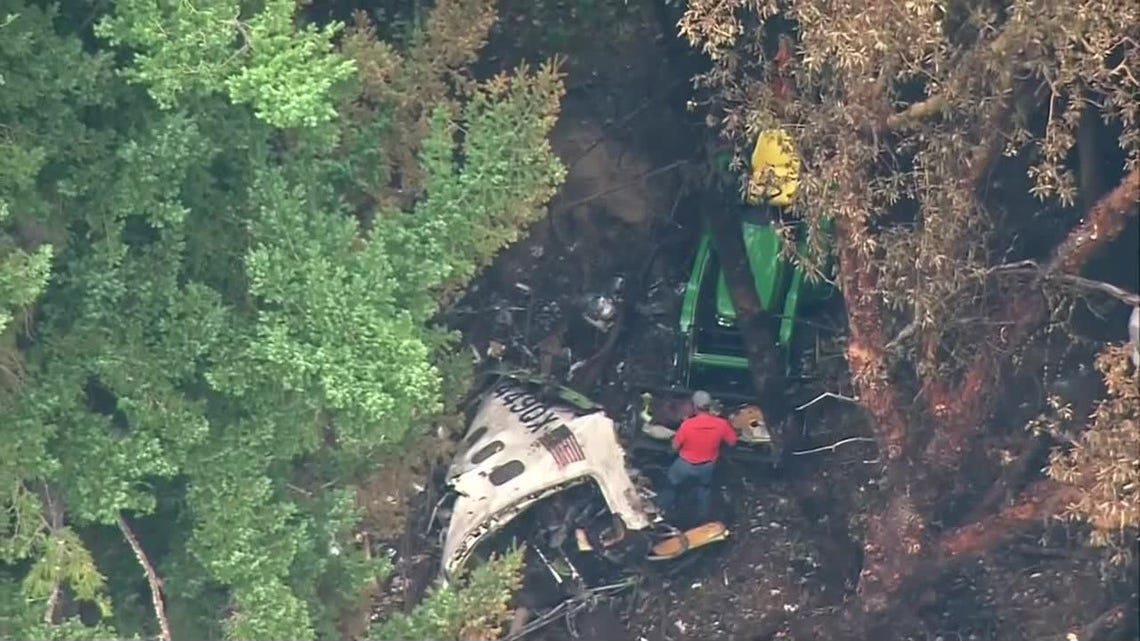
Russell points the aircraft toward small Ketron Island, with few inhabitants.
Shortly afterwards, the aircraft disappeared from radar.
Nobody on the ground was injured.
Later, authorities confirmed what had already become inevitable.
Richard Russell died on impact.
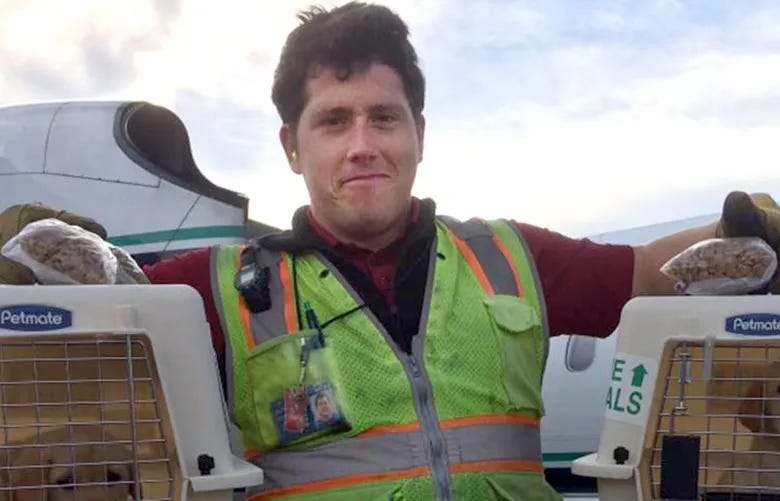
“I’m just a broken guy… got a couple of screws loose… I never knew it until now.” Richard Russell
If you, or someone you know, is going through a difficult time, seek help.
In Portugal, you can call the SNS Psychological Counselling Line — 1411, staffed by psychologists and nurses specializing in mental health and psychiatry.